Accessible and Disabled-Compliant Hand Dryers
What Buyers Need to Know
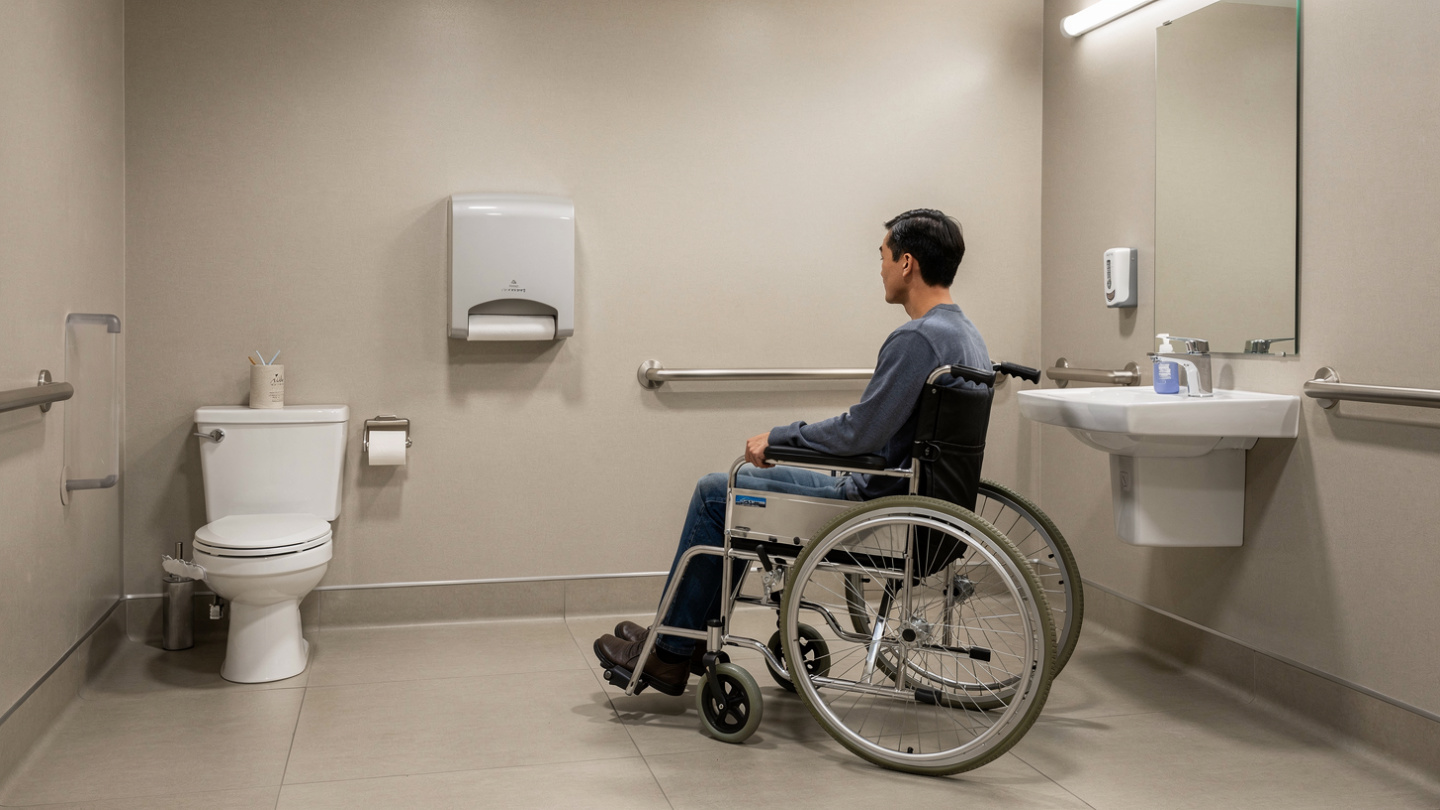
Choosing a hand dryer for an accessible or disabled bathroom is not simply a matter of selecting a powerful model and fixing it to the wall. In Australian commercial washrooms, the dryer must be practical for a wide range of users, including wheelchair users, people with limited reach, people with reduced hand strength, older users, children, and people with sensory sensitivities. The product itself matters, but the installation position, noise level, activation method, projection from the wall, drying performance, and ongoing maintenance are just as important.
For many projects, accessibility requirements will be influenced by the National Construction Code, the Disability (Access to Premises — Buildings) Standards, and AS 1428.1 design principles. Requirements can vary depending on the building type, whether the work is new construction or a refurbishment, and the interpretation of the building certifier, architect, or access consultant. Buyers should therefore treat the hand dryer as part of the overall accessible washroom design, not as an isolated appliance.
Accessibility Starts With the Installation, Not Just the Product
A hand dryer may be marketed as suitable for accessible bathrooms, but it will only perform properly if it is installed in a location that users can reach and operate safely. In accessible sanitary facilities, the operative component or air outlet is commonly required to sit within an accessible reach range, often between 900 mm and 1100 mm above the finished floor. It should also be positioned away from internal corners so that a wheelchair user can approach it comfortably.
The dryer should be operable with one hand and should not require twisting, tight gripping, pinching, or complicated controls. Automatic sensor activation is usually preferable because it avoids the need to press a button. However, the sensor must be reliable and positioned so that users with limited reach can activate it without awkward movement.
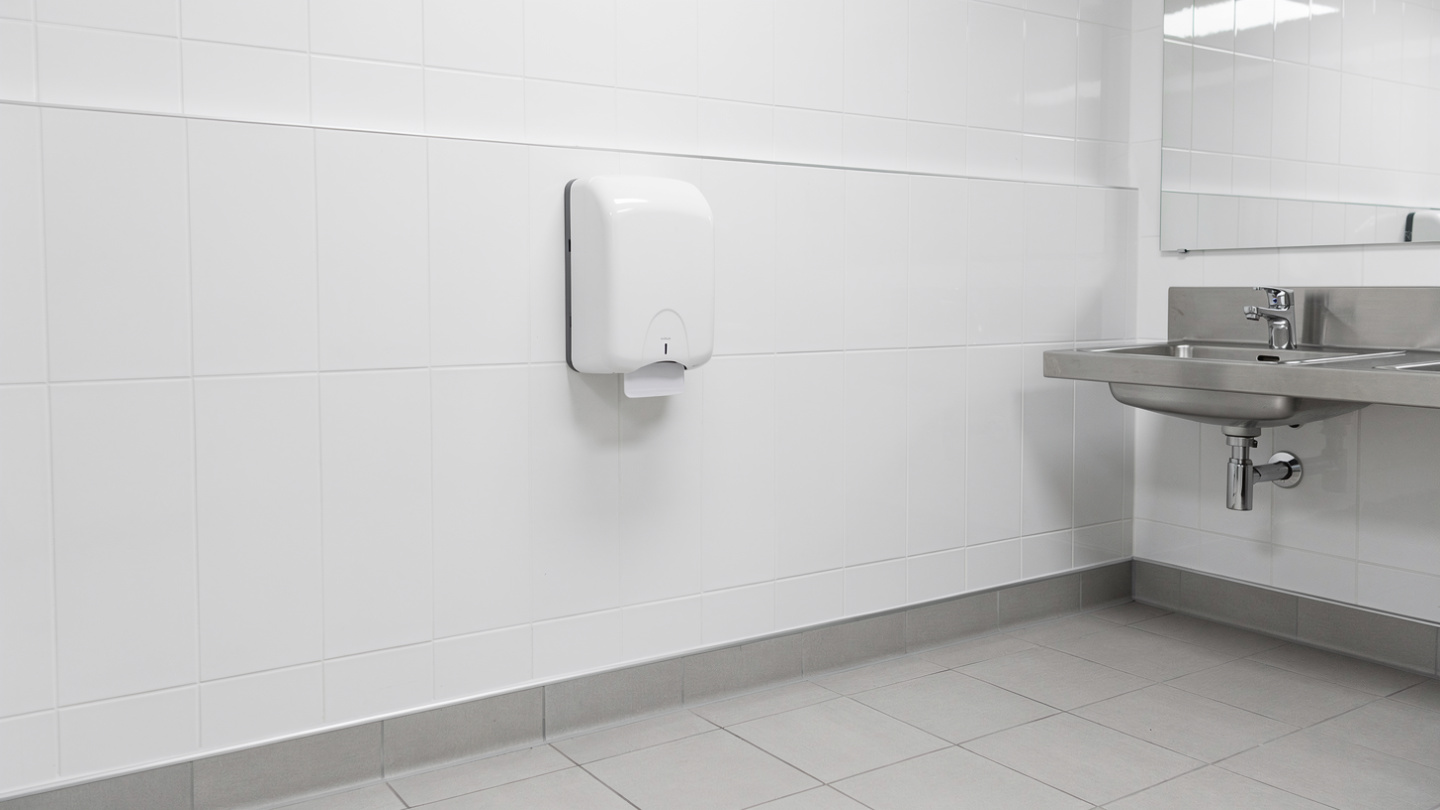
Projection from the wall is another important issue. A bulky dryer installed in a circulation path can become a hazard, particularly for people with vision impairment or mobility aids. In compact accessible washrooms, slim-profile dryers are often easier to integrate because they reduce the risk of obstruction and make it easier to maintain clear circulation space.
Understand the Washroom Type Before Choosing a Dryer
The right accessible hand dryer depends heavily on the type of bathroom or washroom. A single accessible toilet in an office does not have the same requirements as a public facility in a shopping centre, transport hub, school, stadium, gym, or hospitality venue. Before buying, consider who will use the washroom, how often it will be used, how closely it will be supervised, and how much space is available around the basin.
In an office or low-traffic commercial bathroom, a compact automatic dryer with moderate drying speed and quiet operation may be more suitable than a very powerful high-speed model. In a busy public washroom, faster drying, vandal resistance, robust construction, and easy cleaning become more important. In hospitality venues, appearance and noise control may matter more because the washroom experience contributes to the overall impression of the venue.
For schools, childcare centres, aged care settings, and healthcare-adjacent environments, usability and hygiene are especially important. The dryer should be intuitive, safe to approach, easy to activate, and not excessively loud. A model that works well for able-bodied adults may not be ideal for children, wheelchair users, or people who are sensitive to high noise levels.
Key Accessibility Features to Look For
When comparing hand dryers for accessible washrooms, focus on features that improve real-world usability rather than relying only on broad marketing claims. Useful accessibility-related features may include:
- Automatic sensor activation so users do not need to press a button.
- A reachable air outlet or operative area when installed at the correct height.
- A slim or compact body that minimises obstruction in circulation areas.
- Clear and intuitive use, without complicated instructions.
- Consistent sensor response for users approaching from different angles.
- Moderate noise output, particularly in small rooms or sensitive environments.
- Durable construction that can withstand frequent use and cleaning.
- A finish that contrasts sufficiently with the wall where visibility is a concern.
It is also worth considering the position of the basin, soap dispenser, mirror, grab rails, door swing, and waste fixtures. The user should be able to wash and dry their hands without needing to manoeuvre unnecessarily around the room. In an accessible bathroom, convenience and independence are central design goals.
Drying Speed: Fast Is Useful, But Not Always the Only Priority
High-speed hand dryers can be a good choice for commercial washrooms because they reduce queueing, improve user satisfaction, and shorten the time spent at the drying area. This is particularly valuable in high-traffic venues such as gyms, universities, shopping centres, restaurants, airports, entertainment venues, and public amenities.
However, faster dryers often use stronger airflow, and stronger airflow can increase noise. In a large public washroom this may be acceptable, but in a small accessible toilet the same dryer may feel too loud or intense. Some users may find very powerful air streams uncomfortable, especially if the dryer is positioned close to the user’s body or face when seated in a wheelchair.
The best choice is not automatically the fastest model. For a high-volume public facility, rapid drying may be a priority. For an office, medical suite, hotel room-adjacent bathroom, aged care facility, school, or accessible unisex toilet, a balanced model with good drying performance and lower noise may provide a better user experience.
Noise Level Matters More in Accessible Toilets
Noise is often overlooked when buying hand dryers, yet it can strongly affect comfort. Accessible toilets are frequently single rooms with hard surfaces, which means sound can feel louder than it would in a larger multi-user washroom. A dryer that seems acceptable in a showroom may be unpleasant in a small tiled room.
For offices, restaurants, hotels, libraries, healthcare settings, aged care facilities, schools, and family-friendly venues, consider models designed for quieter operation. Some high-speed dryers offer adjustable motor settings, allowing the installer or facility manager to balance drying speed against noise. This can be useful where the same model is used across different areas of a building.
Noise is not only a comfort issue. Loud dryers can be distressing for some neurodivergent users, children, older people, and people with sensory sensitivities. If the washroom is intended to be broadly accessible, a quieter and less aggressive drying experience may be more inclusive.
Hygiene and Touch-Free Operation
Touch-free drying is generally preferred in commercial and public washrooms because it reduces contact with shared surfaces. Automatic hand dryers also avoid the waste handling issues associated with paper towels, such as overflowing bins, damp waste, blocked toilets, and increased cleaning demands.
Some hand dryers include filtration systems, antimicrobial surfaces, or designs that reduce water splash and pooling. These features can be useful, but buyers should assess them practically. A filtration system is only beneficial if filters are checked and replaced according to the manufacturer’s maintenance instructions. A hygienic design still needs regular cleaning, particularly around the air outlet, sensor area, and nearby wall or floor surfaces.
For accessible bathrooms, hygiene also includes placement. A dryer should not blow directly onto grab rails, toilet areas, baby change surfaces, or stored consumables. It should be located so that water does not drip across the floor in a way that creates a slip risk.
Energy Efficiency and Running Costs
Running costs matter in commercial washrooms, especially where the dryer is used many times a day. Energy-efficient hand dryers can reduce operating costs compared with older heated models, particularly if they use high-speed airflow and lower wattage motors. Some models use heat, some rely mainly on air speed, and some allow settings to be adjusted.
A heated dryer may feel more comfortable in cooler environments, but it can use more energy. A high-speed, low-heat dryer may be more efficient, but it may feel cooler on the hands. The right balance depends on the venue, climate control, expected traffic, and user expectations. For example, a premium office or hospitality venue may favour comfort and low noise, while a busy public facility may prioritise fast drying and low operating cost.
When comparing running costs, do not look only at the purchase price. Consider electricity use, expected lifespan, maintenance needs, cleaning time, downtime, and the cost of alternatives such as paper towels, bins, liners, waste collection, and labour. A more expensive dryer can be economical over time if it reduces consumable costs and performs reliably in a high-traffic environment.
Durability, Vandal Resistance and Public Use
Accessible washrooms in public or semi-public buildings may experience heavy use, rough handling, and occasional vandalism. In these environments, durability should be a major buying factor. Look for robust housings, secure fixings, tamper-resistant construction, and finishes that are easy to clean. Stainless steel and heavy-duty metal covers are often preferred in public facilities because they are more resistant to impact and wear than lightweight plastic covers.
Vandal resistance is especially relevant for public toilets, transport facilities, schools, universities, sporting venues, parks, clubs, entertainment venues, and late-night hospitality environments. A low-cost domestic-style dryer may not withstand these conditions. If the dryer fails, the accessible facility becomes less usable, which can create inconvenience for users and extra work for facility managers.
For supervised office bathrooms or low-risk commercial spaces, a lighter-duty model may be acceptable. For unsupervised public washrooms, invest in a commercial-grade dryer with a strong casing, reliable motor, and secure wall mounting.
Installation Requirements Buyers Should Check
Before purchasing, confirm that the selected dryer can be installed in the required location. This includes checking wall structure, electrical supply, mounting height, clearances, distance from corners, projection into circulation space, and proximity to basins and doors. The installer should be given the product dimensions and installation manual before the wall is finished, particularly on new builds or major refurbishments.
Electrical requirements vary between models. Some dryers may require hardwiring by a licensed electrician, while others may have different power demands. The electrical provision should be planned early so that conduit, cabling, switching, and wall reinforcement do not need to be altered later.
Wall strength also matters. Commercial hand dryers can be subject to repeated force from users leaning on them, bumping into them, or pulling away quickly. In plasterboard or lightweight wall systems, additional backing may be required. Poor installation can make even a good dryer unsafe or unreliable.
Style, Finish and Visibility
Style should not be the first concern in an accessible washroom, but it still matters. A well-chosen hand dryer can support the overall appearance of the bathroom and help the space feel professional, clean, and well maintained. Common finishes include white, brushed stainless steel, polished stainless steel, satin, black, and other architectural finishes.
For premium offices, hotels, restaurants, showrooms, and hospitality venues, the finish may need to match tapware, soap dispensers, door hardware, grab rails, or other bathroom accessories. For schools, gyms, public amenities, and industrial sites, practicality and durability may be more important than visual refinement.
Visibility should also be considered. A dryer that blends completely into the wall may be harder for some users to identify. In accessible environments, strong visual contrast between fittings and background surfaces can assist people with low vision. This does not mean the dryer needs to look institutional; it simply means the finish should be chosen with usability as well as design in mind.
Commercial Versus Residential Use
Most accessible and disabled-compliant hand dryer discussions relate to commercial or public buildings. In these settings, the dryer needs to cope with repeated use, meet relevant building expectations, and support safe access for the public, staff, visitors, or customers. Commercial-grade models are generally more appropriate because they are designed for higher usage, longer duty cycles, and tougher cleaning routines.
Residential bathrooms are different. A hand dryer may be installed in a private accessible bathroom for convenience, but the legal and technical requirements can differ depending on whether the project is private, NDIS-funded, part of specialist disability accommodation, or part of a new dwelling subject to livable housing requirements. In residential settings, comfort, noise, compact size, and ease of use are often more important than vandal resistance.
If the dryer is for a business, public facility, school, hospitality venue, or workplace, choose a commercial model and confirm the installation with the relevant professional. If the dryer is for a private home, focus on safe reach, simple activation, low noise, and suitability for the user’s daily routine.
Maintenance and Cleaning Considerations
A hand dryer in an accessible washroom should be easy for cleaning staff to inspect and maintain. Check whether the model has filters, water collection trays, removable parts, or service indicators. A dryer that requires regular filter replacement may offer hygiene benefits, but only if the maintenance schedule is followed.
Cleaning staff should be able to wipe the casing, sensor area, outlet, surrounding wall, and nearby floor without difficulty. In busy washrooms, water marks and dust can build up around the dryer, particularly with high-speed airflow. Smooth surfaces and simple shapes are usually easier to keep clean than complex housings with deep grooves or difficult-to-reach edges.
Maintenance access should not compromise accessibility. Avoid placing the dryer where service panels are blocked by grab rails, doors, vanity units, or other fixtures. A dryer that is difficult to maintain is more likely to be neglected, which can shorten its service life and reduce hygiene performance.
Common Buying Mistakes to Avoid
One common mistake is choosing a hand dryer based only on drying speed. Speed is important, but a very loud or bulky dryer may be a poor fit for a small accessible toilet. Another mistake is assuming that a product is compliant by itself. Accessibility is usually achieved through the combination of product choice, mounting height, location, reachability, circulation clearance, and safe operation.
Buyers should also avoid selecting a domestic or light-duty model for a commercial washroom simply to reduce upfront cost. If the dryer is underpowered, slow, noisy, fragile, or unreliable, it may cost more in complaints, maintenance, replacement, and poor user experience. Conversely, there is no need to over-specify a premium vandal-resistant unit for a quiet staff bathroom where a compact commercial model would be sufficient.
Another frequent issue is leaving the hand dryer decision until late in the project. By that stage, electrical points, wall framing, tiles, basins, grab rails, and mirrors may already be fixed. Early selection gives the architect, builder, electrician, and access consultant a better chance of achieving a clean, compliant, and practical installation.
Practical Selection Guide by Venue Type
For offices and corporate washrooms, look for quiet automatic dryers with a neat finish, moderate energy use, and reliable performance. A slim stainless steel or white unit may suit accessible toilets where space is limited and appearance matters.
For restaurants, cafés, hotels, and hospitality venues, prioritise low noise, attractive finish, fast enough drying performance, and a clean user experience. Guests should not leave the bathroom with wet hands, but the dryer should not disrupt the atmosphere of nearby dining or accommodation areas.
For schools and universities, choose durable automatic dryers that are simple to use, easy to clean, and resistant to rough treatment. Noise control may be important, especially for younger students or users with sensory sensitivities.
For gyms, aquatic centres, stadiums, shopping centres, and public amenities, high-speed drying, strong construction, vandal resistance, and low running costs are usually more important. These venues often justify a more robust commercial model because traffic levels are higher and downtime is more disruptive.
For healthcare, aged care, and community facilities, consider hygiene, low noise, gentle operation, easy activation, and dependable maintenance access. The dryer should support independence without startling or overwhelming users.
Questions to Ask Before You Buy
- Is this dryer suitable for the expected traffic level?
- Can it be installed with the outlet or operative component within the required accessible reach range?
- Will it project too far into the circulation space?
- Can a wheelchair user approach and activate it comfortably?
- Is the sensor reliable and genuinely hands-free?
- Is the noise level appropriate for the room size and user group?
- Does the wall construction support secure mounting?
- Are the electrical requirements practical for the project?
- Will cleaning staff be able to maintain it easily?
- Is the finish suitable for the venue and visible enough for users to identify?
Conclusion: Choose for Access, Use and Environment
The best hand dryer for an accessible or disabled-compliant bathroom is one that combines correct installation, simple operation, suitable reach, dependable drying, manageable noise, and appropriate durability for the venue. In a quiet office or hospitality bathroom, a compact, low-noise automatic dryer may be the most practical choice. In a busy public washroom, a faster and more vandal-resistant commercial model may justify the higher upfront cost. In schools, healthcare, aged care, and community facilities, comfort, reliability, and ease of use should carry extra weight.
Do not choose a dryer in isolation. Consider the entire washroom layout, including the basin, door, grab rails, clearances, electrical points, wall strength, and user movement through the space. For projects where accessibility compliance is required, confirm the final selection and installation position with the builder, certifier, architect, or access consultant before purchase. A well-chosen hand dryer will not only dry hands efficiently; it will help create a safer, more inclusive and more professional washroom for every user.