Quiet Hand Dryers
How to Choose a Low-Noise Hand Dryer for Offices, Cafes and Schools
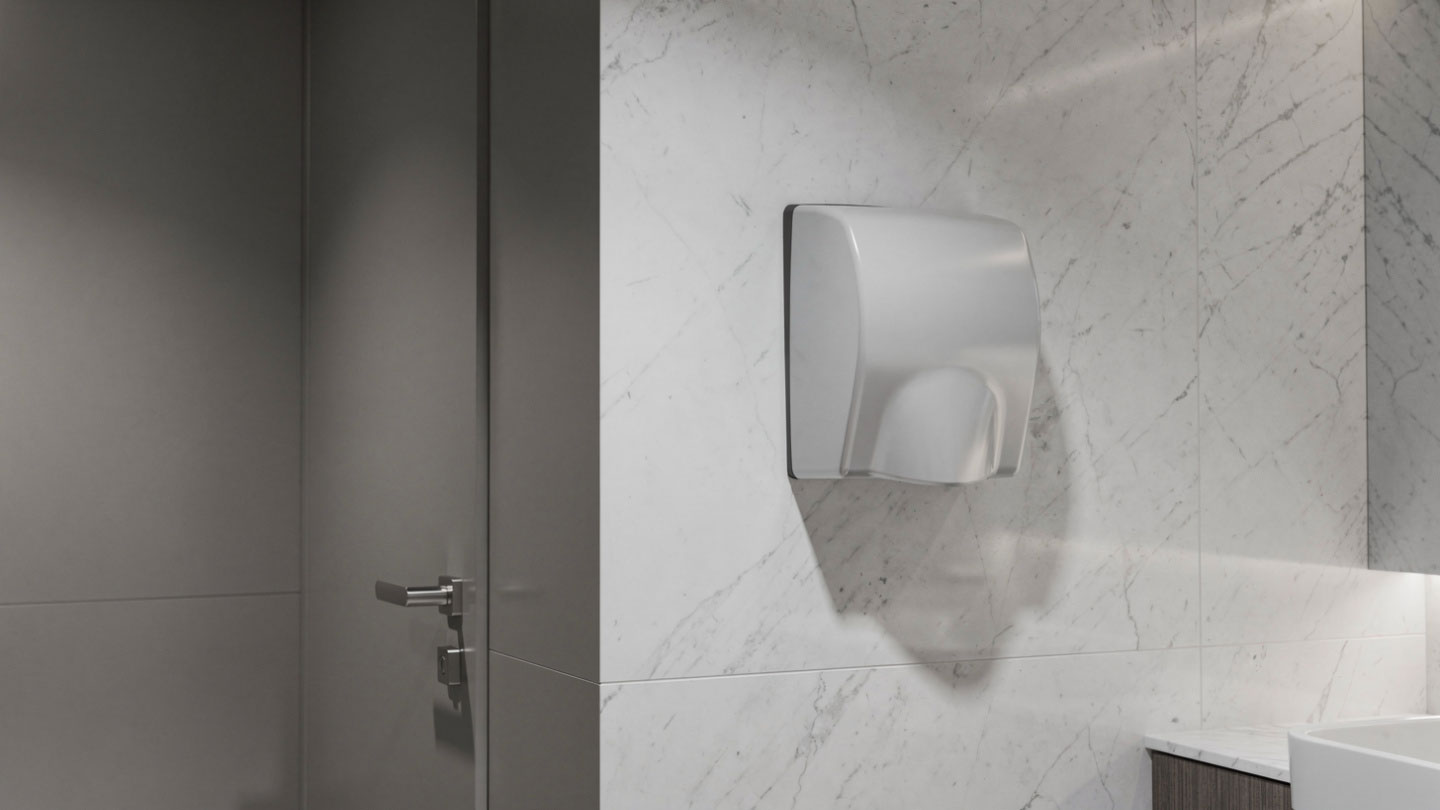
Noise is one of the most important practical factors when choosing a hand dryer, especially in offices, cafes, schools, childcare centres, libraries, healthcare settings and hospitality venues. A dryer that performs well in a busy shopping centre may be too loud for a small bathroom next to a meeting room, classroom or dining area. Choosing the right low-noise hand dryer means balancing sound level, drying speed, hygiene, energy use, installation requirements and long-term durability.
A quiet hand dryer should not simply be the lowest-powered model available. It should dry hands effectively without creating an uncomfortable washroom environment. The best choice depends on who will use the bathroom, how often it will be used, where it is located, and whether the priority is comfort, fast throughput, low running costs, vandal resistance or a premium appearance.
Why Hand Dryer Noise Matters
Hand dryer noise can affect the overall comfort of a building. In compact washrooms, tiled rooms and bathrooms with hard surfaces, sound can bounce around and seem louder than the dryer’s stated noise rating. This is particularly noticeable in small cafes, office suites, schools, medical clinics and accommodation venues where the bathroom may be close to occupied rooms.
Loud dryers can also be uncomfortable for children, older users and people who are sensitive to noise. In schools and childcare environments, a lower-noise dryer can reduce reluctance to use the dryer and help encourage better hand hygiene. In offices and hospitality venues, quieter operation helps maintain a more professional and pleasant atmosphere.
Noise should therefore be considered alongside performance. A dryer that is very quiet but slow may frustrate users and lead to wet hands, water on floors or increased paper towel use if both options are provided. A dryer that is very fast but loud may be suitable for some high-traffic public washrooms, but less appropriate near workspaces, classrooms or dining areas.
Understanding Noise Ratings
Hand dryer noise is commonly described in decibels, often written as dB. A lower decibel rating generally indicates quieter operation, but the figure should be treated as a guide rather than the only decision point. Testing distance, room acoustics, motor type, air speed and installation surface can all affect how loud the dryer seems in real use.
As a practical rule, low-noise hand dryers are usually preferred where the bathroom is close to quiet areas. Standard high-speed dryers may be acceptable in larger amenities blocks, gyms, public facilities and busy commercial washrooms where fast drying is more important than a very quiet sound profile. For small enclosed rooms, a modest reduction in noise can make a noticeable difference.
When comparing models, consider both the stated noise level and the nature of the sound. A lower-pitched airflow sound may be less irritating than a sharp, high-pitched motor noise, even if the measured decibel rating is similar. If noise is a major concern, look for models specifically designed for reduced sound output rather than simply choosing the cheapest or smallest option.
Match the Dryer to the Washroom Type
The best quiet hand dryer for an office may not be the best choice for a school, cafe or gym. The washroom type should guide your decision because it affects traffic level, user expectations, available wall space, cleaning needs and the acceptable level of noise.
- Offices: Quiet operation, professional appearance, energy efficiency and low maintenance are usually the main priorities. A compact or slimline low-noise dryer often suits office bathrooms well.
- Cafes and restaurants: Noise control is important if the bathroom is near dining areas. Style, finish and hygiene also matter because the washroom contributes to the customer’s impression of the venue.
- Schools: Durability, safety, ease of use and moderate noise are important. A robust dryer with automatic operation and simple maintenance is usually preferable.
- Gyms and leisure centres: Higher traffic may justify a faster dryer, but noise should still be considered in changing rooms and smaller amenities areas.
- Public facilities: Vandal resistance, strong construction, fast drying and reliable operation may be more important than achieving the quietest possible sound level.
- Residential or home use: A quieter, compact model may be more suitable than a heavy-duty commercial dryer, provided it is installed safely and used within its intended duty level.
Drying Speed Versus Noise
The main trade-off with hand dryers is that faster models often use higher air speed, and higher air speed can create more noise. This does not mean all fast dryers are unsuitable for noise-sensitive locations, but it does mean speed should be considered carefully.
In a busy washroom, a slow dryer can create queues and increase user frustration. In a quiet office bathroom, a slightly longer drying time may be acceptable if the dryer operates more discreetly. In schools, cafes and small commercial spaces, a balanced model is often better than choosing the fastest possible dryer.
Drying time also affects hygiene and cleanliness. If users walk away with wet hands, water may drip onto floors, door handles and vanity areas. A good low-noise hand dryer should still provide enough airflow to dry hands properly within a reasonable time.
Energy Efficiency and Running Costs
Quiet hand dryers can also be economical to run, but energy efficiency depends on motor design, heater use, drying time and standby consumption. Some modern dryers use high-speed unheated or low-heat airflow to reduce electricity use, while others use heated air for comfort. Heated models may feel pleasant in cooler environments but can consume more energy than unheated high-efficiency dryers.
When estimating running costs, consider more than the wattage alone. A lower-wattage dryer that takes much longer to dry hands may not always be more efficient in practice. A well-designed dryer with a shorter drying cycle and efficient motor may deliver better real-world performance.
For commercial washrooms, also compare hand dryers with the ongoing cost of paper towels. Paper towels require purchasing, storage, refilling, waste removal and cleaning around bins. A hand dryer has an upfront purchase and installation cost, but can reduce consumable expenses over time, especially in medium and high-traffic bathrooms.
Hygiene Considerations
For most commercial settings, automatic sensor operation is preferable because users do not need to touch the dryer. This helps reduce contact points in the washroom and makes the dryer easier to use. Sensor quality matters: a poor sensor can cause delayed activation, false starts or frustration, while a reliable sensor improves the user experience.
Some dryers include filtration or antimicrobial surfaces, depending on the model. These features may be useful in healthcare, hospitality, food service and childcare environments, but they should be considered alongside routine cleaning. No hygiene feature replaces proper washroom maintenance.
The area around the dryer should also be easy to clean. If a dryer blows water onto nearby walls, mirrors or floors, it can create extra cleaning work. In smaller bathrooms, consider the direction of airflow, mounting position and distance from sinks or doors.
Installation Requirements
Before buying a hand dryer, check the electrical requirements, wall construction, available space and intended mounting height. Most commercial hand dryers require hardwired installation by a licensed electrician. The suitability of the existing circuit should be confirmed before purchase, particularly when replacing an older unit or installing multiple dryers.
Wall strength is also important. A hand dryer should be mounted securely to a suitable surface, especially in schools, public amenities and high-use commercial washrooms. Lightweight partition walls may need reinforcement. In vandal-prone areas, stronger mounting and a robust casing are important.
Placement has a major effect on usability. The dryer should be close enough to basins that users do not drip water across the floor, but not so close that it interferes with handwashing. It should not obstruct doorways, accessibility clearances or traffic flow. In small washrooms, a slimline or compact dryer may be the most practical option.
Durability and Vandal Resistance
For quiet office or cafe bathrooms, appearance and low noise may be the main focus. For schools, gyms and public facilities, durability becomes more important. A dryer in a high-use environment should have a strong casing, reliable motor, secure fixings and a design that can tolerate regular cleaning.
Metal covers, tamper-resistant fasteners and robust construction are useful where vandal resistance is a concern. In lower-risk environments, a lighter-duty model may be acceptable, but it should still be suitable for commercial use if installed in a business washroom.
It is also worth considering the expected service life. A cheaper dryer may appear economical at first, but if it is noisy, slow, unreliable or unsuitable for the traffic level, it may cost more through repairs, replacement or user complaints. Premium models can be easier to justify in busy washrooms where performance, reliability and presentation matter every day.
Maintenance and Cleaning
Low-noise hand dryers still need regular cleaning and inspection. Dust, lint and general washroom residue can build up around air inlets, sensors and surfaces. If the dryer has filters, they should be checked and replaced or cleaned according to the manufacturer’s instructions.
Maintenance requirements should be realistic for the venue. A small office may prefer a simple dryer with minimal servicing needs. A busy school or public facility may need a more robust model that can handle frequent cleaning and heavy use. Cleaning staff should be able to access the exterior easily without special tools for routine wiping.
Also consider water management. Some blade-style or hands-in dryers may collect water in a tray, which must be emptied and cleaned. Hands-under dryers may have fewer parts to manage, but placement is important to prevent water dripping across the floor.
Style, Finish and Washroom Presentation
A hand dryer is a visible part of the washroom, so style and finish matter in customer-facing venues. Stainless steel, brushed metal, white, black or other neutral finishes can suit different interiors. In cafes, restaurants, hotels and premium offices, a well-chosen dryer can support a clean, modern impression.
Finish should also be practical. Gloss finishes may show fingerprints more readily, while stainless steel can offer a professional look and good durability. In schools and public washrooms, resistance to knocks, marks and cleaning chemicals may be more important than visual refinement.
Compact designs are useful in small bathrooms where wall space is limited. However, very small dryers may not always provide the best drying performance for busy commercial use. Choose a dryer that suits both the visual style and the expected demand.
Commercial Versus Residential Use
A commercial washroom usually requires a dryer designed for frequent use, reliable operation and safe installation in a public or workplace setting. Residential bathrooms generally have lower traffic and may not need the same level of durability. However, if a dryer is being installed in a business, school, cafe, gym or public facility, it is sensible to choose a commercial-grade model.
Commercial models often provide better construction, stronger motors, improved sensors and more suitable mounting options. They may cost more upfront, but they are designed for the realities of shared bathrooms. Residential-style units may be quieter or cheaper, but they may not withstand high traffic or commercial cleaning routines.
How to Choose the Right Low-Noise Hand Dryer
Start by identifying the washroom’s main requirement. If the bathroom is near desks, classrooms, consulting rooms or dining tables, prioritise quiet operation and a comfortable sound profile. If the bathroom is busy throughout the day, choose a dryer that balances lower noise with adequate drying speed. If the location is public or unsupervised, place more weight on durability and vandal resistance.
Then check the practical details: available wall space, power supply, mounting surface, cleaning access and user flow. A technically good dryer can still be the wrong choice if it is too large, poorly positioned or difficult to maintain. For accessible bathrooms, ensure installation does not interfere with required clearances or ease of use.
Finally, compare whole-of-life value rather than just purchase price. A suitable quiet dryer should reduce noise complaints, dry hands effectively, control running costs and suit the appearance of the washroom. The right model should feel like part of the facility rather than an afterthought.
Conclusion: Choosing the Best Quiet Hand Dryer for Your Setting
For offices, cafes and schools, the best quiet hand dryer is usually a balanced model that offers low-noise operation, reliable automatic activation, reasonable drying speed and simple maintenance. A compact low-noise dryer may be ideal for a small office or cafe bathroom, while a more durable commercial unit may be better for schools, gyms and public facilities. In high-traffic washrooms, it can be worth investing in a premium dryer that dries quickly without excessive noise.
Before purchasing, consider the room size, traffic level, user comfort, installation requirements, energy use, cleaning routine and expected durability. Quiet operation is important, but it should not come at the expense of practical performance. The right hand dryer should suit the washroom environment, support good hygiene, control running costs and provide a comfortable experience for the people who use it every day.