Hand Dryer Installation Guide
Power Requirements, Placement and Bathroom Compliance Tips
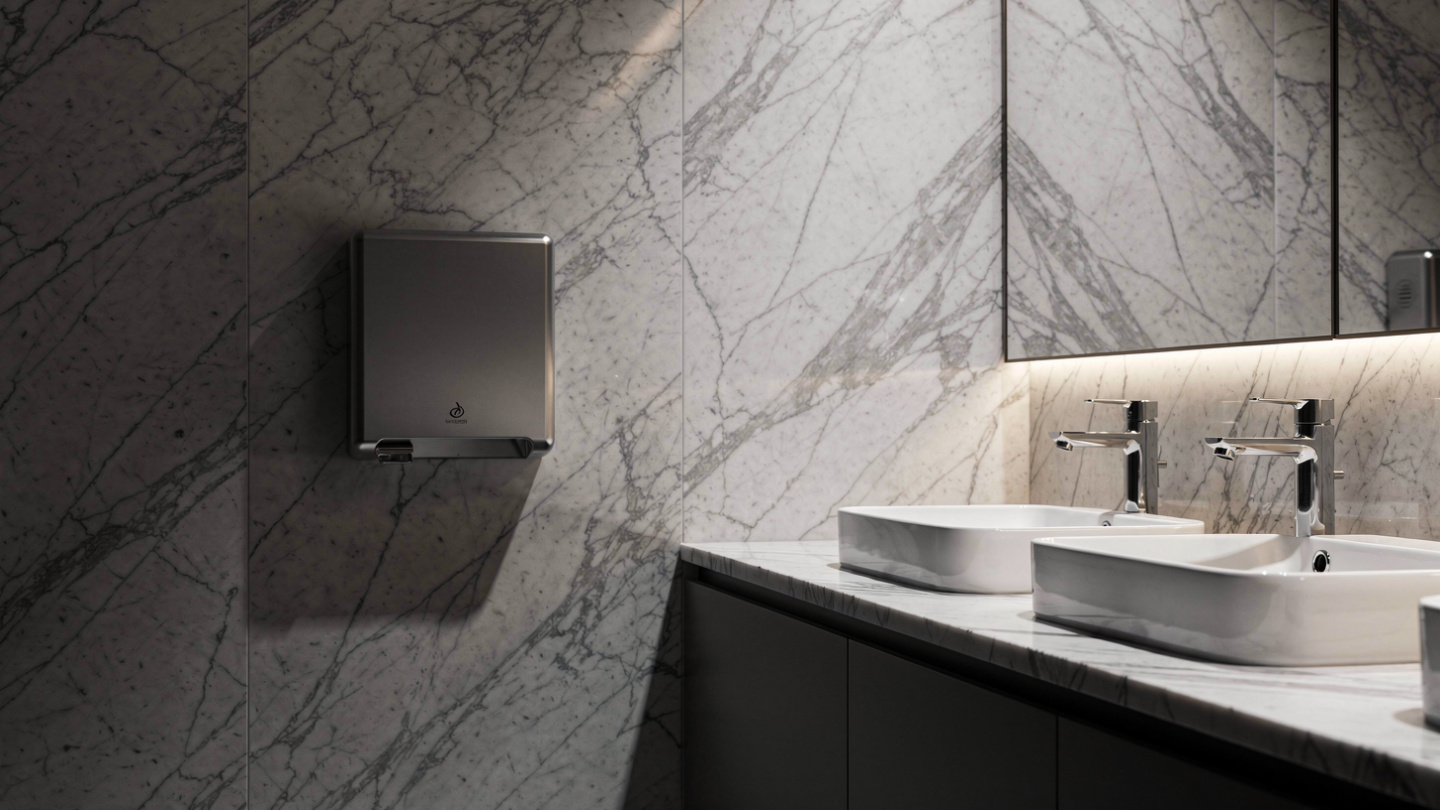
Choosing a hand dryer is not only a question of drying speed or appearance. A successful installation depends on power availability, bathroom layout, user volume, accessibility, hygiene expectations, noise levels and long-term maintenance. The right model for a quiet office bathroom may be quite different from the best option for a busy gym, school, shopping centre or public facility.
This guide explains the practical installation factors to consider before buying a hand dryer, with a focus on power requirements, positioning and bathroom compliance. It is intended to help you choose a unit that works reliably in the real space, not just on paper.
Start With the Type of Washroom
The first decision is to match the hand dryer to the environment. A low-traffic office bathroom may only need a compact, quiet and energy-efficient dryer. A high-traffic commercial washroom usually needs faster drying, stronger construction and a motor designed for frequent use. Public amenities, schools and transport facilities may also require vandal-resistant features such as robust covers, concealed fixings and tamper-resistant design.
Restaurants, hotels and hospitality venues often place more importance on finish, noise and user experience. A stainless steel or satin-finish dryer may suit a premium interior, while a compact white or brushed metal unit may be more appropriate for a practical staff bathroom. In gyms, aquatic centres and sporting facilities, durability, airflow performance and moisture resistance become more important because the surrounding environment is often harsher.
Residential bathrooms are a different case. A commercial hand dryer can be installed in a home, but many models are designed around commercial electrical supply, wall strength, airflow and noise expectations. For domestic use, check whether the dryer is practical for the room size and whether the sound level will be acceptable.
Understanding Power Requirements Before You Buy
Hand dryers are electrical appliances and must be selected with the available power supply in mind. Before ordering a unit, check the voltage, wattage, current draw and whether the dryer is designed to be hardwired or connected by plug and lead. Many commercial hand dryers are hardwired by a licensed electrician, particularly in public or commercial bathrooms where exposed plugs may be unsuitable.
Higher wattage does not automatically mean better performance. Older-style warm-air dryers often use more energy because they rely heavily on heating elements. Modern high-speed dryers may use powerful airflow to reduce drying time, sometimes with lower total energy use per dry. Some models include switchable heat settings, allowing the owner to reduce power consumption in warmer climates or lower-traffic bathrooms.
The electrical circuit must be suitable for the dryer’s load. In some installations, a dedicated circuit may be recommended or required, especially where multiple dryers are installed in the same washroom. The electrician should check cable capacity, circuit protection, isolation requirements and whether the bathroom environment affects the installation method.
For commercial projects, do not assume the existing power point or wiring is suitable. If you are replacing an older hand dryer, the new unit may have different electrical requirements, mounting dimensions or isolation needs. Always compare the manufacturer’s installation manual before purchase so that the electrical work does not become more expensive than expected.
Hardwired Versus Plug-In Hand Dryers
Hardwired hand dryers generally provide a cleaner, safer and more professional installation. They are common in commercial washrooms because the wiring is concealed and less vulnerable to tampering. This is usually the preferred option for offices, restaurants, schools, gyms, public facilities and hospitality venues.
Plug-in hand dryers can be convenient in some lower-risk settings, but they may not be suitable for all commercial bathrooms. Visible leads can look untidy, create a tampering risk and may complicate cleaning. In wet or publicly accessible areas, the suitability of any plug-in installation should be confirmed by a qualified electrician and assessed against local electrical rules.
Placement: Where a Hand Dryer Should Be Installed
Good placement improves user flow, reduces mess and helps prevent congestion. A hand dryer should normally be positioned close enough to the basins that users do not need to walk across the room with wet hands. At the same time, it should not block access to sinks, doors, cubicles, baby change areas or accessible circulation spaces.
Where possible, install the dryer on a wall that allows users to stand comfortably without interrupting others. In a narrow washroom, a slimline or compact dryer may be better than a larger high-speed unit that projects further from the wall. In a busy bathroom, multiple dryers may be preferable to one premium model if queues are likely to form at peak times.
Also consider the direction of airflow. Some high-speed dryers can blow water droplets downwards or towards the wall if used with very wet hands. Installing the unit above a surface that is easy to clean, and away from delicate finishes, helps reduce maintenance. For very high-use areas, a model with a drip tray or a design that controls water movement may be worth considering.
Mounting Height and Accessibility
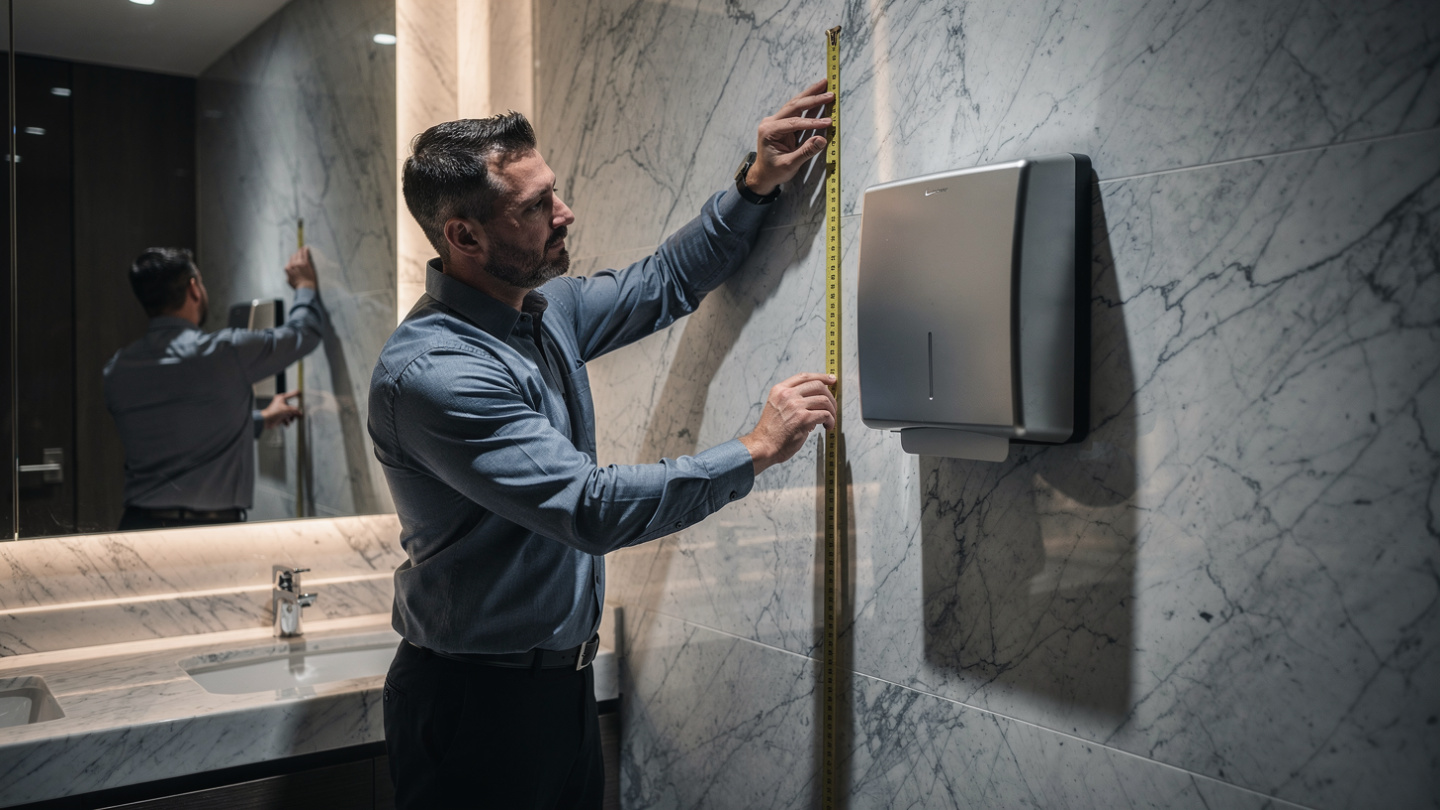
Mounting height should be based on the manufacturer’s instructions, the expected users and any accessibility requirements that apply to the building. A dryer used mainly by adults in an office may be mounted differently from one in a primary school, childcare facility or accessible public bathroom.
In accessible bathrooms, the dryer should be reachable and usable without creating an obstruction or hazard. The user should not need to stretch awkwardly, move into an unsafe position or block circulation space. Projection from the wall can also matter, especially in circulation paths where protruding objects may create a risk for people with vision impairment or mobility aids.
Australian projects should consider the National Construction Code, disability access obligations and relevant accessibility standards. Requirements can vary depending on the building type and the nature of the works, so it is sensible to involve a builder, access consultant or certifier where compliance is critical. The product’s dimensions, operating method, sensor position and wall projection should all be checked before purchase.
Clearances, Wall Strength and Fixing Method
A hand dryer must be fixed to a wall that can support its weight and the repeated force of daily use. Lightweight plasterboard may require appropriate anchors, noggings or backing support. In schools, gyms and public toilets, the mounting method should be especially robust because the unit may be knocked, pulled or misused.
Clearance around the dryer is also important. The unit needs enough space for airflow, maintenance access and comfortable hand movement. Installing it too close to a corner, mirror, basin, shelf or door frame can make it awkward to use and harder to clean. Always check the manufacturer’s minimum clearance requirements before finalising the location.
Drying Speed Versus Noise Level
Fast hand dryers are popular because they reduce queues and improve user satisfaction in busy washrooms. However, high-speed airflow can also increase noise. This trade-off matters in offices, restaurants, hotels, medical clinics and other environments where bathrooms are close to work areas, dining rooms, meeting rooms or guest spaces.
A quieter dryer may be a better choice for premium hospitality venues or small bathrooms with hard surfaces that amplify sound. In a stadium, gym or public transport facility, speed and durability may be more important than low noise. When comparing models, look beyond headline drying claims and consider how the dryer will sound in the actual room. Tiled walls, concrete floors and small enclosed spaces can make any dryer seem louder.
Energy Efficiency and Running Costs
Running cost depends on wattage, drying time, heat use, traffic level and electricity price. A dryer with a higher power rating but much shorter drying cycle may cost less to operate than a slower unit that runs for longer. This is why energy use per dry is often more meaningful than wattage alone.
For low-traffic bathrooms, the difference in running cost between models may be modest. For shopping centres, schools, airports, gyms and large offices, energy consumption can become significant because the dryer may be used hundreds or thousands of times per week. In these settings, a more efficient high-speed model may justify a higher purchase price over time.
Heated airflow can improve comfort in cooler conditions, but it usually increases energy use. Some buyers prefer adjustable heat because it allows the dryer to be configured for the season, climate or user expectation. If energy efficiency is a priority, compare models with heat off, eco mode or low-energy operation.
Hygiene Considerations
Hygiene is a major concern in commercial bathrooms, especially in hospitality, healthcare-adjacent environments, schools and food service areas. Touch-free sensor operation is now common and helps reduce contact with the unit. The dryer’s surface should also be easy to wipe clean, with minimal seams or dirt traps.
Some hand dryers include filtration or antimicrobial features, but these should be assessed carefully. Do not buy purely on hygiene claims without understanding what the feature actually does, what maintenance it requires and whether replacement filters are readily available. A filter that is never cleaned or replaced will not deliver the intended benefit.
Placement also affects hygiene. A dryer installed too far from the basin may encourage dripping across the floor. A dryer installed too close to waste bins, toilet doors or crowded circulation areas may be less pleasant to use. Good washroom design combines the right dryer with logical positioning, regular cleaning and adequate ventilation.
Durability and Vandal Resistance
Durability should be matched to the risk level of the site. A quiet office bathroom may not need the same construction as a public park toilet, school washroom or late-night venue. For higher-risk locations, consider a dryer with a strong metal cover, secure wall mounting, concealed fixings and a design that resists tampering.
Plastic covers can be suitable for many indoor commercial bathrooms, particularly where budget and low noise are priorities. Metal covers are often preferred where impact resistance, longevity and appearance are more important. Stainless steel may also suit hospitality and premium commercial interiors because it coordinates well with other bathroom fittings.
Maintenance Access and Cleaning
Maintenance should be considered before installation, not after. The dryer should be positioned where staff can clean around it and access filters, drip trays or service panels if the model includes them. A unit installed tightly between fixtures may look neat at first but become inconvenient to maintain.
In high-traffic washrooms, cleaning teams should check the surrounding wall and floor regularly, especially near high-speed dryers. Water marks, dust build-up and blocked filters can reduce performance and make the bathroom look poorly maintained. Choosing a model with simple cleaning requirements can reduce labour over the life of the unit.
Noise, Comfort and User Experience
User experience affects whether people actually use the dryer properly. A dryer that is too slow can frustrate users and lead to wet hands, paper towel use or water on door handles. A dryer that is too loud may be avoided in quiet venues. A dryer mounted too high, too low or too close to a corner can feel awkward even if the technical specification is strong.
For offices, restaurants and hotels, comfort and perceived quality matter. For gyms and schools, speed and robustness may matter more. For public facilities, vandal resistance, easy cleaning and reliable operation are often more important than premium styling. The best hand dryer is the one that suits the behaviour and expectations of the people using that specific bathroom.
Style, Finish and Bathroom Design
The hand dryer should suit the overall bathroom design. White finishes are practical and often cost-effective. Brushed stainless steel can look more premium and may hide minor marks better than highly polished surfaces. Dark or coloured finishes can suit contemporary interiors but may show dust, fingerprints or water marks depending on the surface.
Size also affects the visual result. A large high-speed dryer may look appropriate in a busy commercial washroom but oversized in a small office bathroom. Compact dryers can be a better choice where wall space is limited, but they may not always offer the same drying performance or durability as larger commercial models.
Planning for Multiple Hand Dryers
In larger washrooms, one hand dryer may not be enough. Consider the number of basins, expected peak traffic and how quickly users need to move through the space. A single fast dryer may work in a medium office, but a school, gym or public venue may need several units to avoid queues.
When installing multiple dryers, spacing matters. Units should not be so close together that users crowd each other, and they should not all be placed in a narrow bottleneck near the exit. Electrical planning is also important because several dryers operating at once may place a greater load on the circuit.
Common Installation Mistakes to Avoid
- Buying a dryer before checking whether the available electrical supply is suitable.
- Installing the unit too far from the basins, causing water to drip across the floor.
- Choosing a high-speed dryer without considering noise in a small or quiet bathroom.
- Mounting the dryer where it obstructs doors, cubicles, accessible circulation space or cleaning access.
- Using inadequate wall fixings for a heavy or high-use commercial unit.
- Ignoring filter access, drip tray cleaning or future servicing requirements.
- Selecting a domestic-style unit for a demanding commercial washroom.
Pre-Purchase Checklist
Before choosing a hand dryer, confirm the basic site conditions and performance requirements. This reduces the risk of buying a unit that is unsuitable for the bathroom or expensive to install.
- What type of bathroom is it: office, restaurant, school, gym, public facility, hotel or residential?
- How many people will use the washroom each day, and when are the peak periods?
- Is the priority drying speed, low noise, low energy use, vandal resistance or premium appearance?
- Is the unit hardwired or plug-in, and does the existing electrical supply suit it?
- Is there enough wall space, clearance and structural support?
- Will the placement suit accessible use and local compliance requirements?
- Are replacement filters, parts or service requirements easy to manage?
- Does the finish suit the bathroom design and expected wear level?
Conclusion: Choosing the Right Hand Dryer for Your Installation
The best hand dryer for your bathroom is the one that suits the site conditions, not simply the one with the fastest drying claim or lowest purchase price. For quiet offices, small commercial bathrooms and hospitality spaces, look for a balanced model with acceptable speed, low noise, efficient operation and a finish that complements the interior. For schools, gyms, public toilets and high-traffic commercial washrooms, prioritise durability, fast drying, easy maintenance and vandal-resistant construction.
Before buying, check the power requirements, installation method, wall strength, clearances, accessibility considerations and expected traffic level. A well-chosen hand dryer should be easy to use, economical to run, straightforward to maintain and properly suited to the bathroom environment. When in doubt, compare the manufacturer’s installation instructions with your actual site and have a licensed electrician confirm the electrical requirements before installation.