How to Maintain and Clean Hand Dryers
For Better Performance and Hygiene
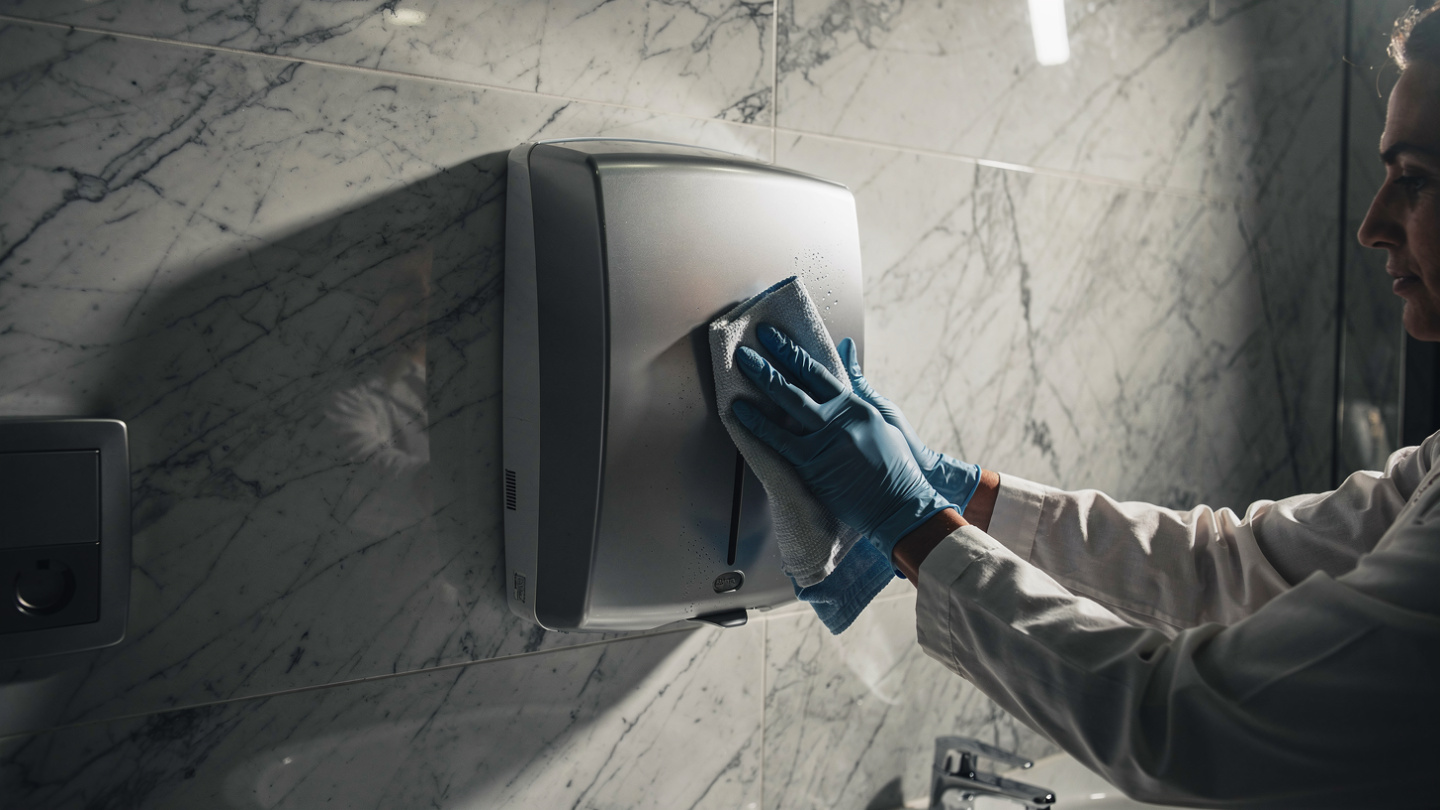
A well-chosen hand dryer should do more than simply dry hands. In a commercial washroom, it needs to perform reliably, support hygiene, control running costs, suit the space, and withstand regular use. However, even a good-quality hand dryer can become noisy, slow, inefficient, or unhygienic if it is not cleaned and maintained properly.
For buyers comparing hand dryers for offices, restaurants, schools, gyms, hospitality venues, public facilities, or commercial bathrooms, maintenance should be considered before purchase, not after installation. A dryer that is easy to clean, simple to access, and suitable for the level of traffic in the washroom will usually deliver better long-term value than a model chosen only for appearance or upfront price.
Why Hand Dryer Maintenance Matters
Hand dryers operate in environments where moisture, dust, airborne particles, soap residue, and heavy use are common. Over time, these conditions can affect airflow, drying speed, hygiene, noise level, and energy efficiency. A blocked air inlet, dirty filter, or poorly cleaned casing can make the dryer work harder than necessary, increasing running costs and reducing user satisfaction.
Regular cleaning also helps protect the appearance of the unit. Stainless steel, white metal, ABS plastic, and coloured finishes can all show marks, fingerprints, soap splashes, and water staining if they are neglected. In customer-facing washrooms such as restaurants, hotels, showrooms, and offices, a poorly maintained hand dryer can make the entire bathroom feel less professional.
Maintenance is also important for hygiene. While hand dryers do not eliminate the need for good handwashing practices, keeping the dryer clean reduces the build-up of grime around air outlets, sensor areas, drip zones, and surrounding wall surfaces. This is especially relevant in high-traffic public bathrooms, healthcare-adjacent settings, schools, gyms, and food service environments.
Choose a Hand Dryer That Matches the Washroom Type
The right maintenance routine begins with choosing a dryer suited to the washroom. A small office bathroom with light use may not need the same level of durability, filter access, or vandal resistance as a public facility, shopping centre, sports venue, or school. Buyers should consider not only how the dryer performs on the first day, but how it will cope after months or years of daily use.
For low to medium traffic bathrooms, a compact automatic hand dryer may be sufficient if it provides reliable sensor operation, acceptable drying speed, and easy external cleaning. For high-traffic commercial washrooms, a more robust model with a durable cover, strong airflow, accessible internal components, and a design that discourages misuse is usually a better investment.
In hospitality and premium office environments, appearance and noise level may be just as important as speed. In gyms, schools, and public facilities, durability, vandal resistance, and ease of cleaning often matter more. In residential settings, a commercial-grade dryer may be unnecessary unless the bathroom is used frequently by many people or the buyer specifically wants a paper-towel-free solution.
Daily and Weekly Cleaning Tasks
Most hand dryers benefit from simple, consistent cleaning. The external cover should be wiped with a soft cloth and a suitable non-abrasive cleaner. This removes fingerprints, dust, water marks, soap residue, and general washroom grime. Avoid harsh scouring pads, strong solvents, or abrasive powders, as these can damage painted, plastic, or stainless steel finishes.
The air outlet should be checked regularly for visible dust or residue. If the dryer has a sensor, the sensor window should be kept clean so the unit activates reliably. A dirty sensor can cause delayed activation, false starts, or failure to operate, which users may mistake for a faulty product.
Surrounding surfaces should also be cleaned. Walls below and around the dryer can collect water droplets, especially in busy bathrooms or where users move their hands away before drying is complete. If a dryer is installed above a vanity, splashback, or tiled wall, cleaning these areas helps maintain the overall hygiene and presentation of the washroom.
- Wipe the exterior cover with a soft cloth and suitable cleaner.
- Clean the sensor area to maintain reliable automatic operation.
- Check the air outlet for visible dust, lint, or residue.
- Clean nearby wall surfaces affected by water droplets or soap splashes.
- Inspect the unit for unusual noise, vibration, looseness, or signs of damage.
Filter Cleaning and Airflow Maintenance
Some hand dryers include air filters, HEPA-style filters, or replaceable filtration components. These can be useful in environments where hygiene is a major concern, but they also introduce an additional maintenance requirement. A filter that is not cleaned or replaced as recommended can restrict airflow, increase drying time, and make the motor work harder.
Buyers should check whether the hand dryer has a filter, where it is located, how easy it is to access, and whether replacement filters are readily available. In a busy commercial washroom, a filter that requires tools, specialist servicing, or awkward disassembly may be neglected. A practical design should allow routine maintenance without excessive disruption.
Reduced airflow is one of the most common signs that maintenance is needed. If users report that drying takes longer than usual, the issue may not be the dryer’s original performance. It may be dust build-up, a blocked inlet, a dirty filter, or poor ventilation around the unit.
Drying Speed, Energy Efficiency, and Maintenance Trade-Offs
Fast hand dryers are popular in commercial washrooms because they reduce queues and improve user experience. However, higher-speed airflow can sometimes mean more noise, stronger air movement, and greater sensitivity to blocked vents or dirty filters. If a fast dryer is not maintained, its performance advantage can quickly decline.
Energy-efficient hand dryers can reduce running costs compared with paper towels and older warm-air models, especially in high-use bathrooms. However, energy performance depends on the unit operating correctly. A dryer with restricted airflow may run longer per user, reducing the benefit of low power consumption or fast drying claims.
When comparing models, buyers should look beyond headline drying times. Consider whether the dryer will remain efficient with normal cleaning, whether staff can maintain it easily, and whether the washroom traffic level justifies a premium high-speed model. In a busy airport-style or gym washroom, paying more for speed and durability may be sensible. In a small office, a quieter and more compact model may be more appropriate.
Noise Level and User Comfort
Noise is an important buying factor, particularly in offices, restaurants, hotels, childcare centres, schools, and healthcare-related environments. Very fast dryers can be louder, especially in tiled bathrooms where sound reflects off hard surfaces. Cleaning and maintenance can also affect noise. Loose covers, worn components, blocked airflow, or poor installation may cause rattling or increased operating sound.
If noise control is important, buyers should consider both the dryer specification and the room itself. A powerful unit in a small tiled bathroom may feel much louder than the same unit in a larger public washroom. Regularly checking that the dryer remains securely mounted and free from obstruction helps prevent unnecessary vibration and noise.
Installation Requirements That Affect Cleaning
Hand dryer placement has a direct effect on cleanliness and maintenance. A dryer should be installed at a practical height, away from obstructions, and in a location where users can dry their hands without dripping water across floors, doors, or high-touch surfaces. Poor placement can create extra cleaning work and increase slip risks.
For commercial installations, electrical requirements should be checked before purchase. Some models may require hardwiring by a licensed electrician, while others may suit different installation arrangements depending on the building. Buyers should confirm power availability, wall strength, clearance requirements, and compliance with applicable local electrical and building requirements.
Accessibility should also be considered. A hand dryer used in a public or commercial washroom should be positioned so that it is practical for the intended users, including people with different heights or mobility needs. A dryer that is too high, too low, or too close to a basin, door, or corner may be harder to use and harder to clean around.
Durability and Vandal Resistance
In public facilities, schools, sports centres, transport locations, and unsupervised bathrooms, durability is a major purchasing factor. A hand dryer with a robust metal cover, concealed fixings, tamper-resistant fasteners, and a strong mounting system may cost more initially, but can reduce replacement costs and maintenance issues over time.
Vandal-resistant design is not necessary for every bathroom. In a private office or controlled hospitality environment, style, quiet operation, and finish may be more important. In public washrooms, however, a lightweight or easily damaged unit can become expensive if covers are dented, sensors are damaged, or the dryer is pulled from the wall.
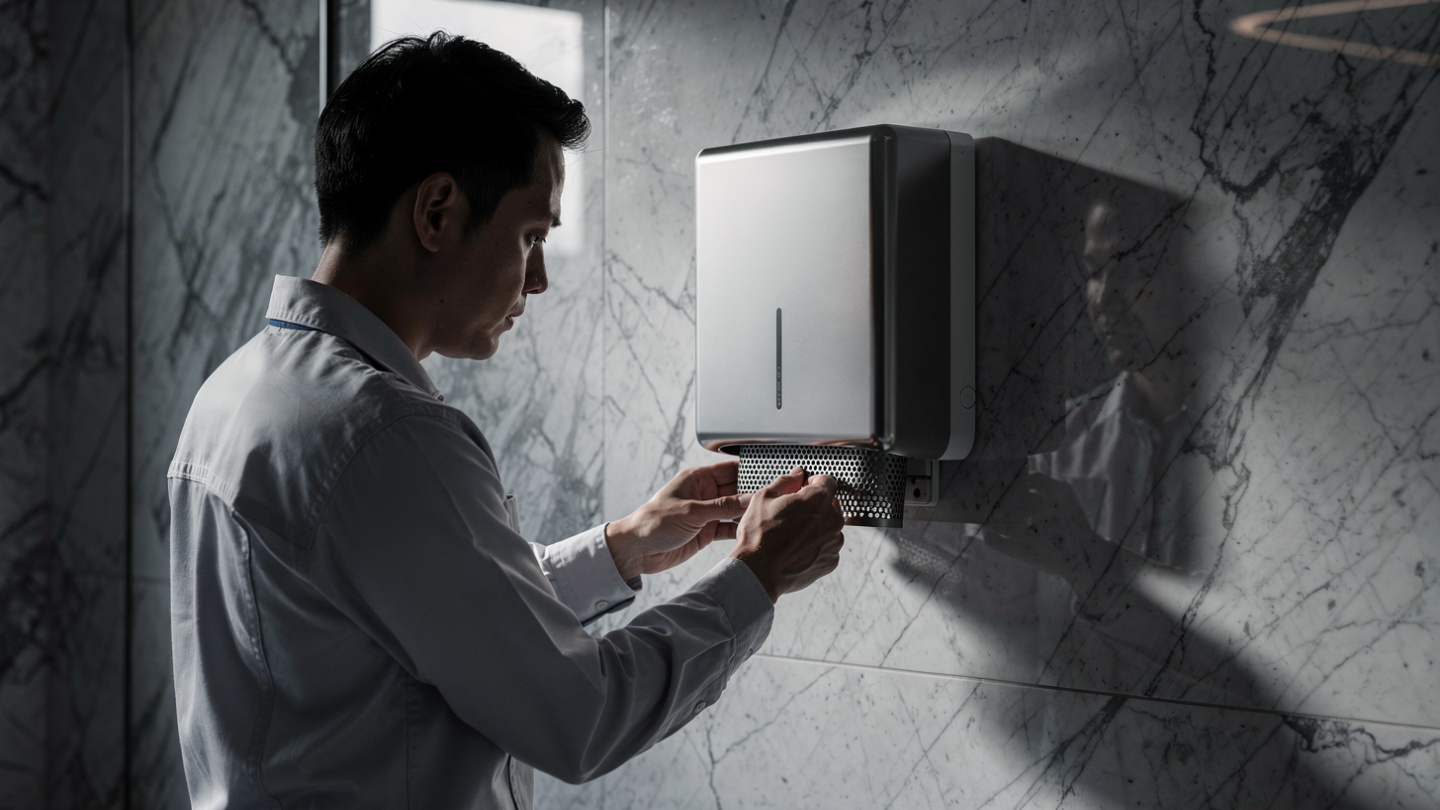
Maintenance staff should periodically inspect high-risk dryers for looseness, impact damage, unusual operating noise, blocked outlets, or signs of tampering. Early attention can prevent minor issues from becoming safety or performance problems.
Hygiene Features and What They Really Mean
Many modern hand dryers promote hygiene-related features such as touch-free sensors, antimicrobial surfaces, filtered air, or designs that reduce water splash. These features can be useful, but they do not remove the need for cleaning. A touch-free dryer still needs its sensor, casing, outlet, and nearby wall surfaces cleaned regularly.
Filter-based models may suit environments where hygiene perception and air quality are especially important. However, buyers should factor in the cost and availability of replacement filters. A filtered dryer that is not maintained properly may perform worse than a simpler model that is cleaned consistently.
For food service, hospitality, education, and public washrooms, hygiene should be assessed as part of the full washroom system. Basin placement, soap availability, ventilation, cleaning schedules, bin placement, floor surfaces, and user behaviour all affect the result. The hand dryer should support that system rather than be treated as a standalone hygiene solution.
Style, Finish, and Ease of Cleaning
Style matters because hand dryers are highly visible fixtures. Stainless steel can suit premium commercial bathrooms, restaurants, and hotels, while white or neutral finishes may suit offices, schools, and general public amenities. Dark or coloured finishes can create a modern look but may show water marks, dust, or fingerprints depending on the surface.
From a maintenance perspective, smooth covers with minimal seams are usually easier to clean. Complex shapes, deep grooves, exposed fixings, or hard-to-reach air channels can collect dust and grime. When comparing models, consider how easily staff can wipe the unit during routine bathroom cleaning.
In high-end washrooms, the best choice is often a balance between appearance and practicality. A stylish dryer that looks good but is difficult to keep clean may not remain attractive in a busy venue. Similarly, a highly industrial model may be durable but visually unsuitable for a boutique hotel, office reception bathroom, or restaurant.
Running Costs and Long-Term Value
The purchase price of a hand dryer is only one part of the total cost. Buyers should also consider electricity use, expected lifespan, installation cost, maintenance time, filter replacement, potential repair costs, and the savings from reducing or eliminating paper towels.
In high-traffic washrooms, a reliable dryer can reduce paper towel purchasing, storage, waste collection, and cleaning associated with overflowing bins. In lower-traffic bathrooms, the savings may be slower to appear, so comfort, convenience, and presentation may be stronger reasons to choose a hand dryer.
Cheaper models may be suitable for light use, but they can be a poor choice for demanding commercial environments if they dry slowly, wear out quickly, or require frequent attention. Premium models may justify their price where traffic is heavy, users expect fast drying, or downtime would reflect badly on the facility.
A Practical Maintenance Schedule
The right cleaning schedule depends on traffic level and washroom conditions. A small office bathroom may only need light daily wiping and periodic inspection. A school, restaurant, gym, or public facility may require more frequent cleaning, especially during peak periods.
- For low-use bathrooms, wipe the exterior regularly and inspect the sensor and outlet during routine cleaning.
- For medium-use commercial washrooms, clean the casing, sensor, air outlet, and surrounding wall surfaces daily or as needed.
- For high-traffic public bathrooms, check the dryer multiple times during busy periods for cleanliness, damage, water build-up, and reliable operation.
- For filtered models, clean or replace filters according to the manufacturer’s guidance and actual site conditions.
- For vandal-prone locations, inspect mounting security, cover condition, and signs of tampering frequently.
Signs a Hand Dryer Needs Servicing or Replacement
Even with regular maintenance, a hand dryer may eventually need servicing or replacement. Warning signs include weak airflow, longer drying times, unusual noise, burning smells, intermittent operation, sensor failure, cracked casing, loose mounting, excessive vibration, or repeated user complaints.
If the dryer is old, inefficient, slow, or costly to repair, replacement may be more practical than servicing. This is especially true in commercial washrooms where poor performance leads to queues, wet floors, paper towel fallback, or a negative impression of the facility.
When replacing an underperforming dryer, review why the previous unit failed. If it was too small for the traffic level, difficult to clean, badly positioned, or not durable enough for the environment, choosing a similar model may repeat the problem. Use the replacement as an opportunity to improve drying speed, hygiene, energy efficiency, noise control, and maintenance access.
Conclusion: Choose a Dryer That Is Easy to Live With
The best hand dryer is not simply the fastest, cheapest, quietest, or most stylish model. It is the one that suits the washroom type, expected traffic, user expectations, installation conditions, cleaning routine, and long-term budget. For a small office or low-use bathroom, a compact, quiet, easy-clean dryer may be the most sensible choice. For a busy commercial washroom, a faster, more durable, vandal-resistant model with accessible maintenance features may deliver better value.
Before buying, consider how the dryer will be cleaned, who will maintain it, how often it will be used, and whether its design supports good hygiene and reliable performance. A hand dryer that is easy to clean and properly matched to its environment will usually perform better, last longer, and provide a more professional washroom experience.