Australian Compliance Laws for Hand Dryers
What You Need to Know
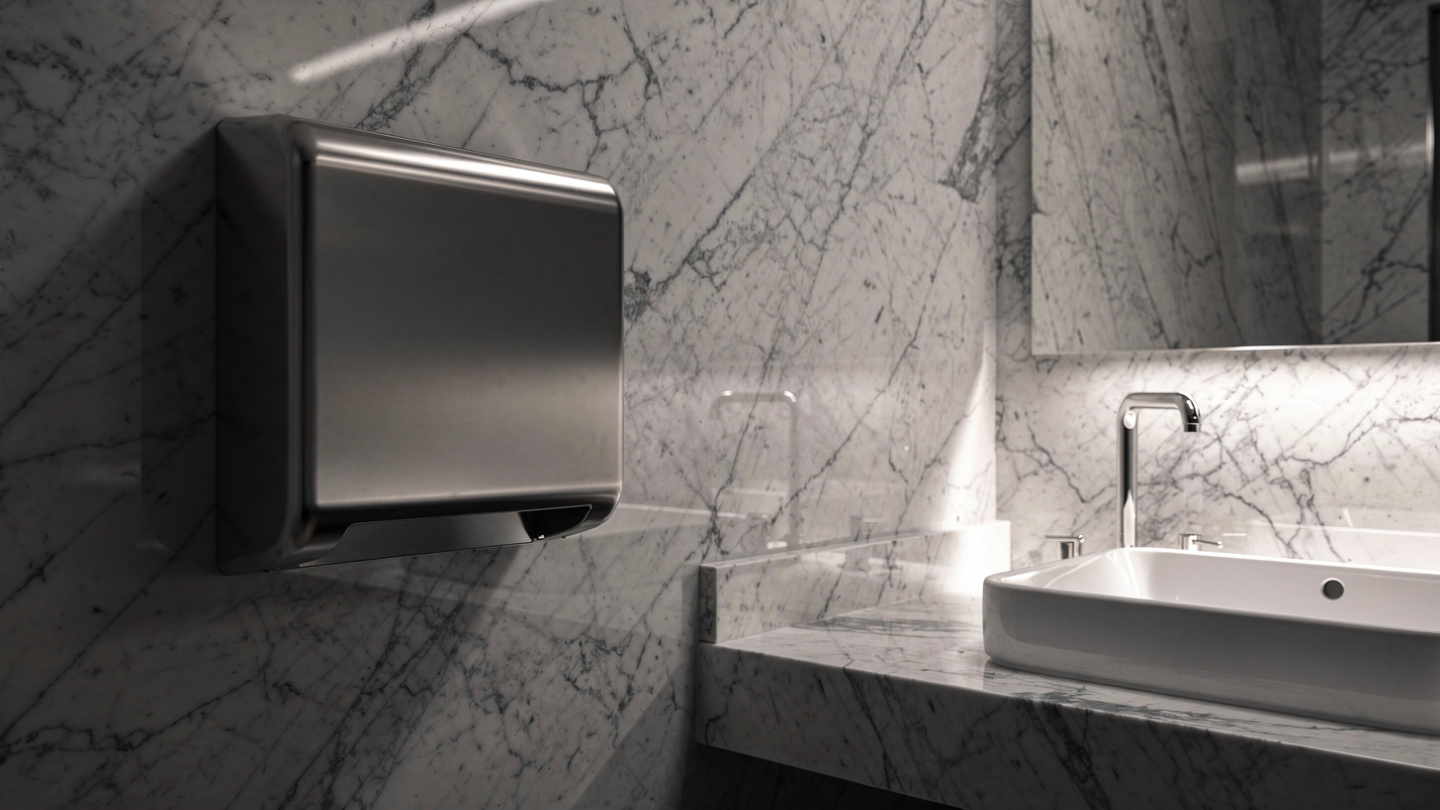
Choosing a hand dryer for an Australian commercial washroom is not just a question of drying speed, appearance or price. The unit must be suitable for the building, safe to install, practical for the expected traffic level and appropriate for users who may include children, staff, customers, guests and people with disability. In many projects, the hand dryer also sits within a broader compliance framework covering electrical safety, building accessibility, food premises hygiene, workplace noise and maintenance responsibilities.
This guide is written for buyers comparing hand dryers for offices, restaurants, schools, gyms, hospitality venues, public facilities and similar environments. It is not a substitute for advice from a licensed electrician, building certifier, access consultant or food safety officer, but it will help you ask the right questions before purchasing.
Start with the Main Compliance Question: Is the Product Legal and Suitable for Australia?
The first compliance issue is whether the hand dryer is suitable for sale and use in Australia. Electrical products sold in Australia should carry the Regulatory Compliance Mark, commonly called the RCM. The Electrical Equipment Safety System states that in-scope electrical equipment must not be sold unless it is marked with the RCM in accordance with AS/NZS 4417.1 and AS/NZS 4417.2, and the RCM also represents compliance with electrical safety and ACMA labelling requirements.
For a buyer, this means you should not rely on overseas markings alone. A CE mark or a claim that the product is “internationally approved” does not automatically prove that the dryer is compliant for Australian sale and installation. Ask the supplier for clear evidence that the product is intended for the Australian market, carries the RCM, and is supported by Australian compliance documentation. Queensland’s Electrical Safety Office also advises buyers to look for the RCM and warns that non-compliant appliances can create risks including electric shock, fire, injury or death.
Hand dryers are covered within the safety standard framework for household and similar electrical appliances. AS/NZS 60335.2.23:2017 is listed as dealing with appliances for skin or hair care, and its scope specifically includes hand dryers. For practical purchasing, the key point is simple: do not buy a hand dryer from an unknown overseas marketplace unless the seller can provide Australian compliance evidence, local support and proper installation instructions.
Understand the Difference Between Product Compliance and Installation Compliance
A compliant product can still be installed incorrectly. Product compliance relates to whether the hand dryer itself meets the relevant electrical safety and marking requirements. Installation compliance relates to how and where the unit is wired, mounted and positioned in the building.
Most commercial hand dryers are hardwired or otherwise connected to fixed electrical wiring. Electrical wiring work must be carried out by a licensed electrician; NSW Government guidance, for example, states that any electrical wiring work must be done by a licensed electrician and that electricians are required to provide a Certificate of Compliance Electrical Work to show that the work has been tested and complies with the regulations.
The Wiring Rules, AS/NZS 3000:2018, are the technical rules electricians use to design, construct and verify electrical installations. Standards Australia describes them as the rules that help electricians design, construct and verify electrical installations. In a washroom, the electrician needs to consider the circuit, isolation, protection, manufacturer instructions, wall construction, cable route, water exposure and the location of nearby basins, showers or cleaning areas.
This matters at the buying stage because different dryers can place different demands on the installation. A high-output model may need more careful circuit planning than a compact low-energy unit. A vandal-resistant metal dryer may be heavier and require stronger wall fixings. A blade-style unit may need a different mounting position and clearance than a conventional hands-under dryer. Before ordering multiple units for a project, give the electrician the product data sheet, installation guide and proposed washroom layout.
Wet Areas, Basins and Electrical Placement
Washrooms are not dry retail walls. They contain basins, wet hands, splash zones, mopping, cleaning chemicals and sometimes showers. NSW Government electrical guidance notes that inspections often find switches and socket-outlets located within restricted zones created by sinks, showers, baths and laundry tubs, and that some do not have the required minimum degree of protection, such as IPX4 in the examples given.
For hand dryer buyers, the practical lesson is to avoid choosing a unit or location in isolation. A dryer should be positioned far enough from direct water exposure, installed with a suitable level of ingress protection for the environment, and mounted where users do not drip water across electrical fittings or create slip hazards. In bathrooms with showers, aquatic centres, gyms, end-of-trip facilities or heavy wash-down cleaning, this becomes more important than in a simple office washroom.
A compact dryer may be easier to fit in a small bathroom, but a cramped position can cause problems if users have to reach awkwardly, if water drips onto the floor in a traffic path, or if the dryer conflicts with accessible circulation space. Conversely, a larger high-speed dryer may work well in a busy venue but may need more wall space, stronger fixings and careful positioning to avoid splash, noise and congestion.
Accessibility: Do Not Treat Mounting Height as an Afterthought
In public and commercial buildings, accessibility requirements are often just as important as electrical compliance. The Disability (Access to Premises – Buildings) Standards are legislated under the Disability Discrimination Act 1992 and are intended to ensure that new buildings, or new work on existing buildings, provide appropriate access for people with disability. Standards Australia explains that the National Construction Code and the Premises Standards identify where access is required and point to AS 1428.1 for technical solutions.
For hand dryers, this means the unit should not simply be installed at whatever height looks visually centred on the wall. In accessible sanitary facilities, the operative part or outlet must be reachable and usable. Many projects require the dryer to be operable with one hand and located within the relevant reach range set out by the applicable version of AS 1428.1. The exact requirement should be checked against the current adopted standard and the project’s access report.
Accessibility also affects the type of dryer selected. A very high-mounted conventional dryer may be difficult for wheelchair users. A deep or protruding unit can create an obstruction in a tight accessible toilet. A blade-style dryer may dry quickly, but the hand-entry height, approach space and side clearance need to work for the intended users. If the washroom includes children, elderly users, wheelchair users or ambulant-accessible facilities, choose the unit and mounting position together rather than treating the dryer as a late-stage accessory.
Food Premises and Hospitality Venues Need Extra Care
Restaurants, cafés, commercial kitchens, bars, hotels and food service venues need to consider hand drying as part of hygiene compliance. Food Standards Australia New Zealand explains that designated, appropriate hand washing facilities must be available and accessible for food handlers, and that thorough washing and drying of hands is a critical factor in preventing foodborne illness.
The Food Standards guidance also notes that hand washing facilities need to be clearly designated for washing hands, arms and face, and gives examples such as providing soap and drying facilities only at the relevant basin. This does not mean every food premises must use electric hand dryers; some sites may use paper towels in food preparation areas. The important point is that the drying method must be suitable for the location, easy to use, maintained, and acceptable to the relevant food safety authority.
In customer bathrooms at restaurants and hospitality venues, a hand dryer can reduce paper towel waste and bin overflow. In back-of-house food preparation areas, however, the buyer should be more cautious. Consider whether local food safety officers, internal hygiene policies or HACCP procedures favour single-use towels in certain preparation zones. If an electric dryer is used, it should not be positioned where air movement, droplets or user congestion could compromise food handling areas.
Noise Compliance and User Comfort
Noise is not only a comfort issue. Safe Work Australia states that workers must not be exposed above 85 decibels as an average over eight hours, and must not be exposed to a noise level above 140 decibels. A single hand dryer used intermittently will rarely be the main workplace noise issue, but high-speed dryers can still be disruptive in small bathrooms, childcare centres, schools, libraries, medical centres, offices and venues where staff work close to the washroom door.
The buying trade-off is straightforward: very fast dryers often use high-velocity air, and high-velocity air can be louder. A quieter dryer may have a longer dry time, but it may be the better choice for low-traffic offices, aged care environments, hotel ensuites or bathrooms near dining areas. In busy stadiums, gyms or shopping centre amenities, a faster model may be justified because the priority is throughput and reduced queuing.
Do not assess noise from a catalogue figure alone. The perceived sound level depends on the room size, wall surfaces, ceiling height, door position and number of dryers operating at once. A dryer that sounds acceptable in a tiled showroom may feel harsher in a narrow reverberant washroom. Where noise matters, ask for the acoustic rating, check whether the dryer has speed or heat settings, and consider installing fewer high-output units in better locations rather than crowding multiple loud dryers together.
Match the Dryer to the Washroom Type
Compliance is the starting point, not the whole buying decision. The right dryer also depends on the site. A school bathroom, a corporate office, a restaurant washroom and a public stadium do not have the same usage pattern, supervision level or durability requirement.
Small office or boutique retail bathroom: Low to moderate traffic, appearance, low noise and simple maintenance are usually the main priorities. A compact, quiet and energy-efficient dryer is usually more important than the absolute fastest drying time.
Restaurant, café or hospitality venue: Hygiene perception, style, customer comfort and waste reduction are key considerations. Choose a finish that suits the fit-out, but confirm whether separate food handling areas need a different hand drying approach.
School, gym or public facility: Durability, vandal resistance, fast throughput and easy cleaning are especially important. Look for robust construction, secure fixings, clear service access and a design that tolerates frequent use.
High-traffic shopping centre, stadium or transport facility: Drying speed, queue reduction, running costs and long service life should guide the decision. Premium high-speed models may justify their cost if they reduce congestion and withstand continuous daily use.
Accessible or ambulant facilities: Reach, clearance, one-handed operation and safe circulation need careful attention. Confirm the exact mounting height, projection and location with the access consultant or certifier before installation.
Drying Speed Versus Energy Use
Drying speed affects user satisfaction. If a dryer takes too long, people may leave with wet hands, wipe hands on clothing or create water drips across the floor. In high-traffic washrooms, slow drying also increases queues. However, speed should be assessed together with energy use, noise and comfort.
Older warm-air dryers may use more heat and take longer. Modern high-speed dryers often rely more on air velocity than heat, which can reduce energy per dry if the cycle is short. The best comparison is not just wattage; it is the likely energy used per drying cycle, multiplied by the expected number of uses. A lower-wattage dryer that runs for a long time may not be cheaper to operate than a higher-output dryer that finishes quickly.
For offices and low-traffic bathrooms, a quiet and efficient unit may be the sensible choice. For public venues, schools and gyms, a faster dryer may save time, reduce paper towel waste and justify a higher upfront price. The decision should be based on total cost of ownership, not simply the cheapest purchase price.
Hygiene Features: Useful, But Do Not Rely on Marketing Claims Alone
Many hand dryers promote hygiene features such as touch-free activation, filters, antimicrobial surfaces, fast dry times or reduced water spread. These can be valuable, but they should be assessed practically. Touch-free operation is usually preferable in public and commercial washrooms because it reduces contact with the appliance. Filters may be useful in higher-end models, but they create a maintenance obligation. If a filter is not cleaned or replaced as required, the benefit may be reduced.
Also consider the surrounding area. A hygienic dryer installed above a dirty floor, overflowing bin or poorly cleaned basin area will not solve the washroom’s hygiene problem. Good hand drying requires the whole hand washing zone to work: basin, soap, drying method, drainage, cleaning schedule and user flow.
Durability, Vandal Resistance and Build Quality
Commercial washrooms place more strain on hand dryers than residential bathrooms. In a public facility, the dryer may be used hundreds of times a day, exposed to impact, scratched by bags, hit by cleaning equipment or tampered with after hours. In these environments, a lower-cost plastic model may not be the most economical option if it fails early or looks damaged quickly.
For schools, gyms, transport facilities, pubs, stadiums and unsupervised amenities, consider metal housings, tamper-resistant fixings, robust sensor design, secure wall mounting and simple service access. Vandal resistance is not only about the casing; it also includes whether the dryer can be pulled from the wall, whether the cover screws are exposed, whether the sensor is protected, and whether parts can be replaced if damaged.
For offices, hotels and restaurants, finish and design may be more important. Stainless steel, matte black, white or brushed finishes can help the dryer suit the tapware, partitions and overall bathroom design. The trade-off is that some finishes show fingerprints, water spots or scratches more readily than others. In high-use bathrooms, easy cleaning may matter more than matching every fitting perfectly.
Running Costs and Maintenance
A hand dryer’s purchase price is only one part of the cost. Running costs include electricity, cleaning time, filter replacement where applicable, servicing and the potential cost of downtime. In many commercial washrooms, electric dryers are chosen to reduce paper towel purchasing, storage, waste collection and blocked bin issues. That saving can be significant, but only if the dryer is reliable and suited to the traffic level.
Maintenance requirements should be checked before purchase. Ask whether the unit has filters, how often they need replacement, whether the cover can be cleaned with standard washroom cleaning products, whether spare parts are available locally, and whether the supplier can support the product after installation. A premium dryer with available parts and service support may be better value than a cheaper imported model with no local backup.
Commercial Versus Residential Use
Residential hand dryers can be suitable for private bathrooms, home laundries or small personal spaces, but they are not always appropriate for commercial washrooms. A commercial site usually needs stronger construction, more reliable sensors, better duty cycle performance, clearer compliance documentation and easier maintenance. In a business setting, a failed dryer can create user complaints, wet floors and extra cleaning work.
For residential or very small office use, a compact low-noise model may be perfectly adequate. For commercial bathrooms, choose a dryer that is clearly intended for commercial or public use, supported by Australian documentation, and appropriate for the likely number of daily activations.
A Practical Pre-Purchase Checklist
- Confirm the hand dryer carries the RCM and is intended for the Australian market.
- Ask for the Australian installation manual, product data sheet and compliance documentation.
- Check whether the unit is suitable for the washroom’s traffic level and duty cycle.
- Give the product information and washroom layout to a licensed electrician before ordering.
- Confirm mounting height, reach, clearance and circulation requirements for accessible facilities.
- Consider noise where bathrooms are near offices, classrooms, dining areas, treatment rooms or bedrooms.
- Compare energy use by likely cost per dry, not wattage alone.
- Check cleaning, filter and spare-part requirements.
- Choose vandal-resistant construction for unsupervised or high-abuse locations.
- For food premises, confirm whether electric hand drying is suitable for the specific area and hygiene procedure.
Conclusion: Choose the Dryer That Fits the Building, Not Just the Catalogue
The best hand dryer for an Australian washroom is the one that is compliant, installable, durable and appropriate for the way the bathroom is actually used. For a quiet office, that may mean a compact, low-noise and energy-efficient unit. For a busy gym or public facility, it may mean a faster, more robust and vandal-resistant model. For a restaurant or food business, hygiene procedure and location matter as much as appearance. For accessible facilities, mounting position and usability must be checked before the wall is drilled.
Start with Australian product compliance, then involve the electrician, certifier or access consultant early. Once the legal and installation requirements are clear, compare drying speed, noise, running costs, maintenance, finish and durability. A hand dryer is a small item in the overall building budget, but the right choice can reduce waste, improve user experience and avoid costly compliance or replacement problems later.