Hand Dryers vs Paper Towels
Cost, Hygiene, Maintenance and Environmental Impact Compared
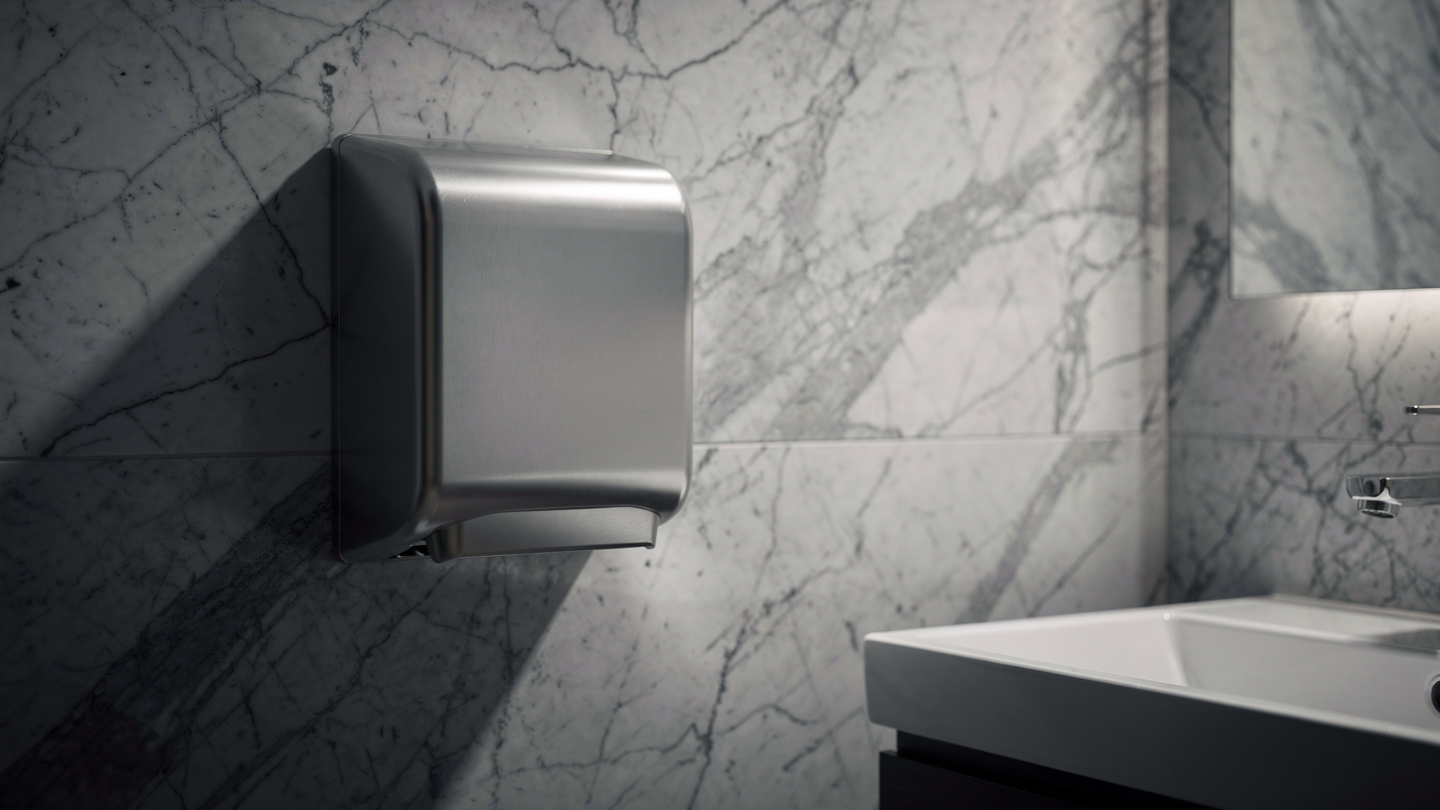
Choosing between hand dryers and paper towels is not just a matter of personal preference. For offices, restaurants, schools, gyms, hospitality venues, public facilities and commercial washrooms, the decision affects operating costs, cleaning routines, waste management, user experience, hygiene perception and environmental impact.
Paper towels are familiar and simple to use, but they create ongoing consumable costs and waste. Hand dryers require an upfront purchase and installation, but they can significantly reduce ongoing supply, storage and disposal requirements. The best option depends on your washroom traffic, available space, hygiene expectations, power access, noise sensitivity, maintenance capacity and the image you want your facility to present.
The Core Difference: Consumable Cost Versus Equipment Investment
Paper towels have a low initial cost but a continuous running cost. Every use consumes stock, fills bins and adds cleaning labour. In busy bathrooms, this can become a major operational expense, especially where towels are overused, dropped on the floor or removed from dispensers unnecessarily.
Hand dryers work differently. They involve a higher initial cost because you need to purchase the unit and have it installed correctly, but once in place the main ongoing cost is electricity. There may also be occasional maintenance, cleaning and filter replacement depending on the model. For high-traffic commercial washrooms, this shift from consumables to equipment can make a hand dryer financially attractive over time.
For low-use bathrooms, such as a small office with only a few staff, the payback period may be longer. In a busy restaurant, school, gym, shopping centre, airport-style facility or public washroom, the reduction in paper towel purchasing and waste handling can be much more noticeable.
Running Costs: What to Compare Before Buying
When comparing hand dryers with paper towels, do not look only at the purchase price of the dryer or the carton price of paper towels. A practical cost comparison should include all recurring expenses associated with each option.
For paper towels, consider the cost of towel cartons, dispenser refilling, storage space, bin liners, waste collection, cleaning time and the possibility of blocked toilets if towels are disposed of incorrectly. In high-use venues, paper towel waste can overflow quickly and make an otherwise clean washroom look poorly maintained.
For hand dryers, consider the purchase price, installation cost, power consumption, expected usage level, durability, serviceability and whether the model has replaceable filters or other maintenance parts. A fast, energy-efficient dryer may cost more upfront but can be more economical in a washroom with frequent daily use.
The most useful calculation is cost per use. Paper towels have a relatively direct cost per use because each visitor consumes one or more towels. A hand dryer spreads the purchase and installation cost across years of use, with electricity as the main variable cost. The more often the dryer is used, the more important drying speed, reliability and energy efficiency become.
Hygiene: Practical Considerations for Real Washrooms
Hygiene is one of the most debated points in the hand dryer versus paper towel discussion. In practice, the hygiene outcome depends on more than the drying method alone. It also depends on how well users wash their hands, whether the washroom is cleaned regularly, how bins are managed, how dispensers are touched, and whether the drying area encourages good hand hygiene habits.
Paper towels are often favoured in healthcare, food preparation and hygiene-sensitive environments because they physically remove moisture from the hands and can also be used to turn off taps or open doors. However, they require bins, and overflowing waste can quickly undermine hygiene and presentation.
Hand dryers remove the need for towel waste and reduce the number of consumable touchpoints. Many modern dryers are automatic, which means users do not need to press a button. Some models include filters or antimicrobial surfaces, although the relevance of these features depends on the application and the maintenance routine. A hand dryer must be installed in a sensible location where water is not blown or dripped onto walkways, walls or floors.
For general commercial washrooms, offices, gyms, schools and hospitality venues, a well-chosen automatic hand dryer can provide a hygienic and practical drying solution. For clinical environments, aged care, food processing areas or facilities with strict infection control protocols, the decision should be checked against internal hygiene policies and any applicable regulations.
Drying Speed and User Experience
Drying speed matters because it affects user satisfaction and queue flow. If a dryer is too slow, people may leave with wet hands, wipe hands on clothing or create water marks around the washroom. In busy venues, slow drying can also cause congestion near basins and exits.
High-speed hand dryers are designed to reduce drying time and improve throughput. They are usually the better choice for restaurants, shopping centres, schools, stadiums, gyms and public facilities where several people may use the washroom in quick succession. The trade-off is that faster dryers can be louder, especially in tiled bathrooms with hard surfaces that reflect sound.
Lower-speed or lower-noise dryers may be more suitable for offices, hotel rooms, childcare settings, libraries, small cafés or washrooms close to dining areas, meeting rooms or accommodation. In these situations, a slightly longer drying time may be acceptable if the unit is quieter and less intrusive.
Maintenance: Refilling, Cleaning and Waste Handling
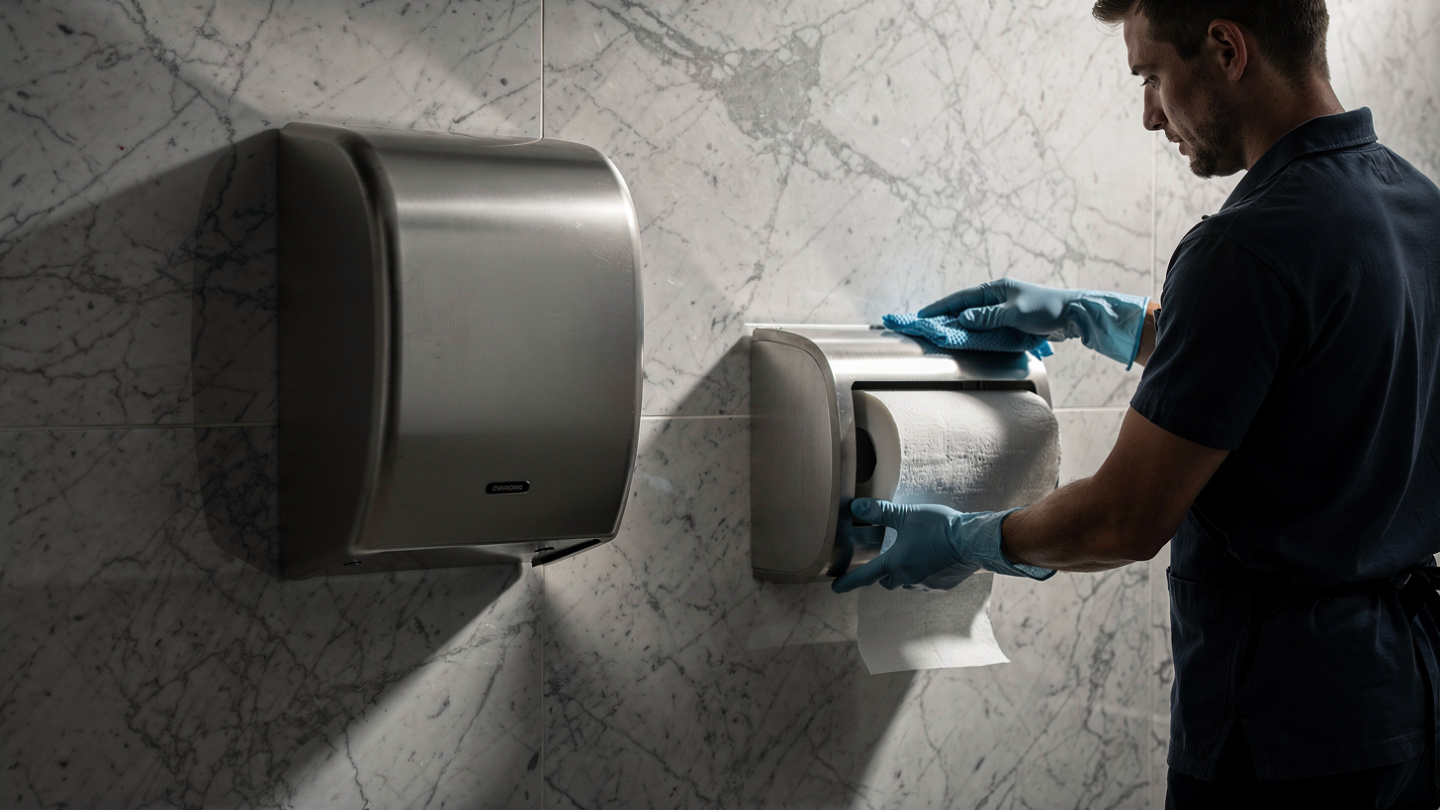
Paper towels require constant replenishment. Someone needs to monitor dispensers, refill them before they run empty, remove waste from bins, replace bin liners and clean up towels that end up on floors, counters or in toilets. This is manageable in a small washroom but becomes labour-intensive in high-traffic environments.
Hand dryers reduce consumable management, but they are not maintenance-free. Units should be wiped down regularly, checked for dust build-up, inspected for damage and kept clear of obstructions. Some dryers may have filters that need periodic cleaning or replacement. In public or semi-public washrooms, vandal-resistant construction and secure wall mounting are important because damage can create downtime and repair costs.
From a facilities management perspective, hand dryers often simplify daily washroom servicing. Cleaners no longer need to refill paper towel dispensers or deal with large volumes of towel waste. However, the dryer still needs to be included in routine inspections so faults are noticed early and the washroom remains fully functional.
Environmental Impact: Waste, Energy and Lifecycle Factors
Paper towels create a visible waste stream. Even where paper is made from recycled content, towels still require manufacturing, packaging, transport, storage and disposal. Used paper towels are often difficult to recycle because they are contaminated with moisture and bathroom waste, so they typically end up in general waste.
Hand dryers use electricity rather than paper. Their environmental impact depends on the dryer’s energy efficiency, drying time, expected lifespan and the electricity source used by the building. A durable, efficient hand dryer used frequently over several years can reduce waste volume substantially compared with paper towels.
The environmental comparison is strongest in high-traffic washrooms where paper towel consumption is heavy. In very low-use bathrooms, the environmental benefit of installing a hand dryer may be less immediate, particularly if the dryer is oversized for the application. For commercial buyers, the best approach is to choose a dryer that matches actual traffic levels rather than simply selecting the most powerful model available.
Noise Level: A Major Factor in Some Venues
Noise is often overlooked until after installation. High-speed dryers can be effective, but they may be unsuitable in quiet environments or in washrooms located near offices, hotel rooms, classrooms, consulting rooms or dining areas. Tiled walls, hard floors and small enclosed bathrooms can make dryer noise seem louder than expected.
For busy public bathrooms, a louder high-speed dryer may be acceptable because speed and durability are the priority. For premium hospitality venues, offices and smaller washrooms, acoustic comfort may matter more. In these cases, look for a model promoted for lower noise operation, or consider where the dryer will be mounted so it does not project sound directly into sensitive areas.
Installation Requirements and Washroom Layout
Hand dryers need suitable electrical access, compliant installation and a practical mounting position. The dryer should be close enough to the basins that users do not drip water across the floor, but not so close that it interferes with tap use, mirrors, doors or accessible circulation space.
In new builds and refurbishments, planning for hand dryers early is ideal because electrical wiring and wall placement can be designed properly. Retrofitting is also common, but the installer may need to assess wall strength, cable routing, switchboard capacity and compliance with local electrical requirements.
Space is also important. Compact hand dryers suit smaller bathrooms, staff amenities and narrow washrooms. Larger or more powerful units may be better for high-traffic areas, but they need adequate wall space and clearance. In accessible bathrooms, placement should not obstruct users or reduce manoeuvring space.
Durability and Vandal Resistance
Durability should be matched to the environment. A small office bathroom may not require the same level of toughness as a school, nightclub, stadium, public toilet block or transport facility. In high-risk locations, look for robust casing materials, secure fixings, tamper-resistant design and a finish that can withstand frequent cleaning.
Metal-bodied dryers, especially stainless steel options, are often chosen for commercial and public settings because they provide a more durable and professional appearance. Plastic-bodied dryers may be suitable for lower-risk indoor environments where budget and compact size are priorities.
Vandal resistance is not only about preventing deliberate damage. It also affects long-term reliability in busy areas where equipment is bumped, leaned on, splashed or used heavily throughout the day. A cheaper unit that fails early may cost more in replacement, downtime and maintenance than a stronger model selected for the correct environment.
Style, Finish and Customer Perception
Washroom fittings contribute to the overall impression of a business. In restaurants, hotels, offices and retail spaces, the hand dryer should suit the style of the bathroom rather than looking like an afterthought. A clean white finish may suit a simple commercial washroom, while stainless steel, brushed metal, black or other modern finishes may better suit premium interiors.
Paper towels can also affect presentation. A neat dispenser and well-managed bin can look acceptable, but overflowing bins, loose towels and wet paper around basins create a poor impression. For customer-facing venues, the appearance of the drying area should be considered alongside cost and hygiene.
Commercial Versus Residential Use
Most hand dryers are designed for commercial use, where durability, safety, drying performance and continuous operation matter. Commercial dryers are appropriate for offices, schools, restaurants, warehouses, gyms, hospitality venues, showrooms and public facilities.
Residential bathrooms usually have lower traffic and different priorities. A homeowner may prefer paper towels, reusable hand towels or a compact dryer depending on the setting. A full commercial high-speed dryer may be unnecessary in a standard home bathroom, although it can be useful in home workshops, pool houses, shared accommodation or properties designed for frequent guests.
For commercial buyers, the key is to avoid choosing a residential-style solution for a commercial washroom. A venue with staff, customers, students or members needs equipment that can cope with regular use and meet the expectations of a public or workplace environment.
When Paper Towels May Still Be the Better Choice
Paper towels can still be the right option in certain situations. They may be preferred where there is no suitable electrical access, where the washroom has very low traffic, where noise must be avoided completely, or where hygiene policies specifically require disposable towels.
They can also be useful as a supplementary option. Some venues provide both hand dryers and paper towels to suit different user preferences or accessibility needs. This can improve user satisfaction, but it also means the venue continues to carry the cost and waste management burden of paper towels.
When a Hand Dryer Is Usually the Better Long-Term Option
A hand dryer is often the better long-term choice for busy commercial washrooms where paper towel usage is high, bins fill quickly, cleaning teams spend too much time managing waste, or the business wants to reduce consumables. The case is particularly strong in schools, gyms, shopping centres, restaurants, entertainment venues, office buildings and public amenities.
For these environments, choose a dryer based on traffic level, drying speed, energy use, noise, durability and installation suitability. A high-traffic washroom generally justifies a faster and more robust dryer. A small office or boutique venue may favour a quieter, compact and visually refined model. A public facility may prioritise vandal resistance and simple maintenance over decorative styling.
Practical Buying Checklist
Before selecting a hand dryer, assess the washroom as a working environment rather than choosing purely by price or appearance. The following points are worth reviewing before purchase:
- How many people use the washroom each day, and are there peak periods?
- Is drying speed more important than low noise?
- Is the bathroom near offices, dining areas, classrooms or accommodation?
- Is there suitable electrical access and wall space for installation?
- Will the unit be exposed to vandalism, rough use or heavy public traffic?
- Does the finish suit the overall bathroom design?
- Are filters, cleaning access or replacement parts easy to manage?
- How much are you currently spending on paper towels, bin liners, waste removal and cleaning labour?
- Would removing paper towel waste improve cleanliness and presentation?
Conclusion: Which Option Should You Choose?
Paper towels are simple, familiar and useful in some hygiene-sensitive or low-traffic settings, but they create ongoing consumable costs, storage needs and waste management work. Hand dryers require an upfront investment and proper installation, but they can reduce running costs, simplify maintenance and improve waste control in commercial washrooms.
For a busy office, restaurant, school, gym, hospitality venue or public facility, a durable and efficient hand dryer is usually the more practical long-term choice. For quiet boutique settings, choose a lower-noise model with a finish that suits the interior. For high-traffic or public bathrooms, prioritise fast drying, vandal resistance and reliability. For very low-use bathrooms or facilities with strict paper towel policies, disposable towels may still be appropriate.
The best decision is not simply “hand dryer or paper towel”; it is choosing the drying method that suits the washroom’s traffic, hygiene expectations, maintenance resources, user comfort and long-term operating costs. A well-selected hand dryer can provide a cleaner, more efficient and more professional drying solution for many commercial environments.