Hand Dryer Buyers Guide
How to Choose the Best Hand Dryer for Your Bathroom

Choosing the best hand dryer for your bathroom is not simply a matter of picking the fastest or most attractive model. The right choice depends on the type of washroom, how many people use it, how much noise is acceptable, how the dryer will be installed, and how well it will stand up to daily use. A hand dryer that works well in a small office bathroom may not be suitable for a busy school, gym, shopping centre, restaurant, or public facility.
A good hand dryer should dry hands effectively, control running costs, support hygiene, fit the space available, and require minimal maintenance. This guide explains the main factors to consider before buying, including performance, energy use, durability, installation, appearance, and suitability for different commercial environments.
Start with the Type of Bathroom or Washroom
The first question is where the hand dryer will be used. Different environments place very different demands on a hand dryer. A private office washroom with light usage can usually use a compact, quiet model. A busy public washroom needs a more robust dryer with faster drying, strong construction, and reliable performance throughout the day.
For offices, reception areas, clinics, restaurants, cafés, and hospitality venues, the hand dryer should balance appearance, noise level, and drying performance. Customers and staff will notice whether the bathroom feels clean, modern, and well maintained. In these settings, a stylish finish, moderate sound level, and dependable drying speed are often more important than choosing the most powerful unit available.
For schools, universities, gyms, transport facilities, shopping centres, stadiums, and public amenities, durability becomes more important. These washrooms often experience heavy traffic, rougher use, and a higher risk of vandalism. In these environments, look for a strong cover, secure fixings, simple maintenance access, and a design that can cope with frequent operation.
Match the Dryer to the Expected Traffic Level
Traffic level is one of the most important buying factors. A hand dryer in a low-use washroom may only be activated a few times per hour. In a high-traffic washroom, it may operate almost continuously during peak periods. Choosing a dryer that is too light-duty for the environment can lead to slow drying, queues, user frustration, overheating, more servicing, or premature failure.
Low-traffic bathrooms include small offices, private staff bathrooms, boutique stores and consulting rooms. These locations can often use a compact dryer with moderate airflow and lower noise. The emphasis should be on comfort, efficiency, and neat installation rather than maximum power.
Medium-traffic washrooms include restaurants, childcare centres, medical practices, shared office floors, small gyms, and local community facilities. These areas need a reliable dryer with good drying speed, sensible energy use, and construction that can handle regular daily operation.
High-traffic washrooms include schools, universities, large workplaces, airports, train stations, shopping centres, clubs, stadiums, and public facilities. These sites benefit from fast, durable dryers designed for frequent use. In many cases, it is better to install multiple dryers rather than relying on one powerful unit, especially where queues may form at peak times.
Understand Drying Speed and User Experience
Drying speed matters because it directly affects user satisfaction. If a dryer takes too long, many people will leave with wet hands or wipe them on clothing. In commercial washrooms, this can make the facility feel poorly equipped, even if the dryer is technically working.
High-speed hand dryers use strong airflow to remove water quickly. Some use a concentrated air blade, while others use a more traditional nozzle or outlet design. Faster dryers are especially useful in busy environments because they reduce waiting time and help keep people moving through the washroom.
There is, however, a trade-off. Faster dryers often produce more noise and may feel more forceful on the hands. In a school, stadium, or shopping centre, this may be acceptable. In a restaurant, hotel, office, healthcare setting, or small bathroom near occupied rooms, a quieter dryer may provide a better overall experience even if the drying time is slightly longer.
When comparing drying speed, avoid looking at speed in isolation. Consider whether users will find the dryer comfortable, whether the airflow is well directed, and whether water is likely to be blown onto walls, mirrors, floors, or the user’s clothing. A well-designed dryer should remove water efficiently without making the surrounding area messy.
Consider Energy Efficiency and Running Costs
Hand dryers can reduce the ongoing cost and waste associated with paper towels, but running costs still vary between models. The main factors are motor power, heating element use, drying time, and frequency of operation. A dryer with a high power rating is not automatically more expensive to run if it dries hands quickly, but long drying cycles or inefficient heating can increase electricity use.
Many modern hand dryers focus on high-speed airflow rather than relying heavily on heat. These models can be more energy efficient because they dry by removing water from the hands rather than evaporating it with hot air. Some dryers include a heating element, while others operate with unheated or low-heat airflow. Heated air may feel more comfortable in some environments, but it may also increase energy consumption.
To estimate running costs, consider how often the dryer will be used each day, how long each cycle lasts, and whether the dryer uses a heater. In high-traffic locations, even small differences in energy use can become significant over time. In low-traffic bathrooms, the purchase price, noise level, appearance, and installation cost may be more important than minor differences in electricity consumption.
Running costs should also include maintenance. A cheaper dryer that requires more frequent servicing, has poor parts availability, or fails early can be more expensive over its lifetime than a better-built unit with a higher upfront cost.
Think Carefully About Hygiene
Hygiene is a major reason many businesses choose hand dryers. A touch-free hand dryer reduces contact points because users do not need to press a button, pull a lever, or touch a dispenser. Automatic sensor operation is now common and is generally preferred for commercial washrooms.
When assessing hygiene, look at how the dryer handles water, airflow, and cleaning. Some dryers are designed to direct water downwards or into a collection area, while others may blow water droplets away from the hands. In busy washrooms, the area around the dryer should be easy to wipe down and should not encourage pooling on the floor.
Some hand dryers include filters or antimicrobial surfaces. These may be useful in certain settings, but they should not be treated as a substitute for proper cleaning and maintenance. If a dryer has a filter, check how often it needs to be inspected or replaced, how easy it is to access, and whether replacement parts are readily available.
The overall washroom layout also affects hygiene. A hand dryer should be positioned close enough to the basins that users do not have to walk across the bathroom with wet hands, but far enough away to avoid congestion around the sink area. Poor placement can lead to wet floors, crowding, and more cleaning work.
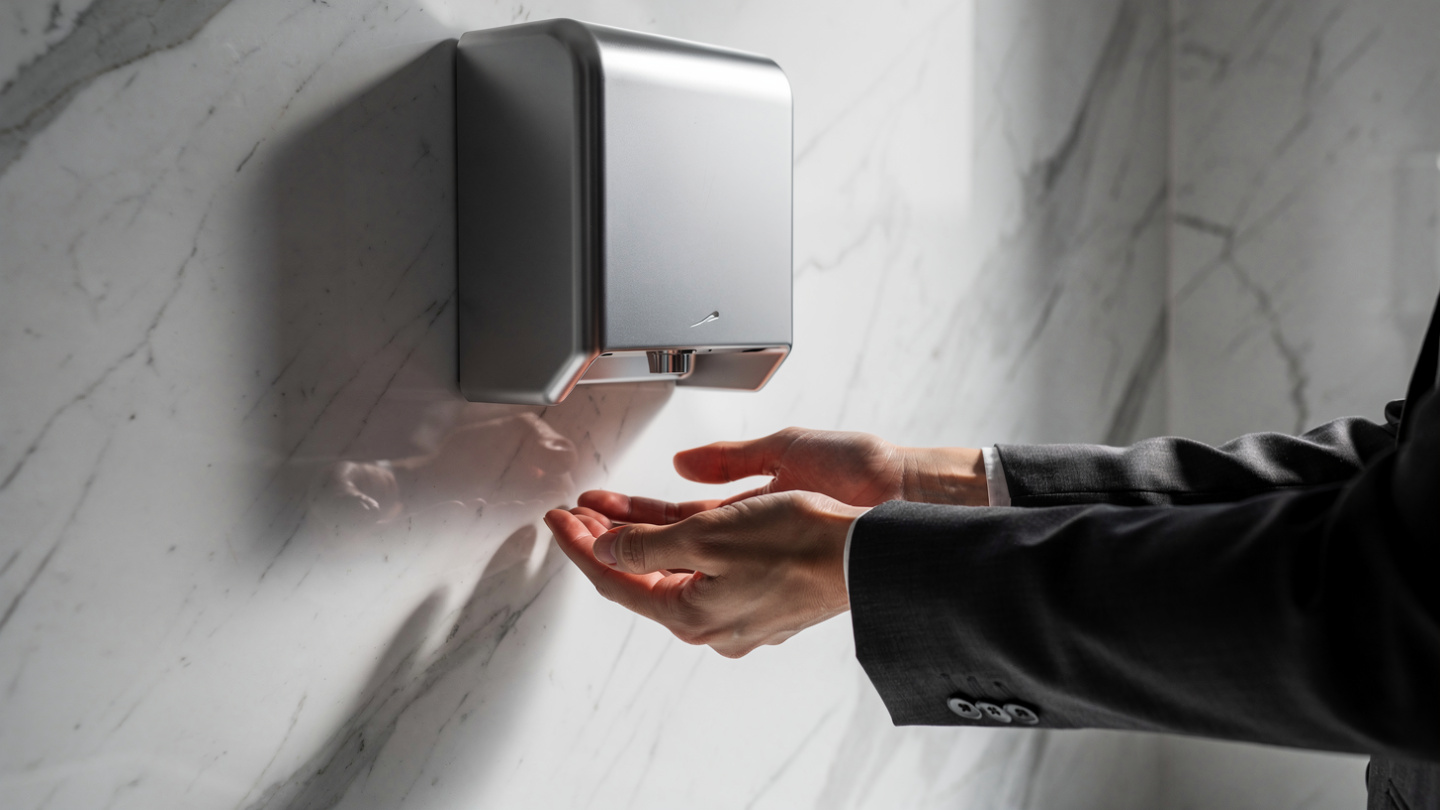
Check Noise Level Before Choosing a Model
Noise is one of the most commonly overlooked issues when buying a hand dryer. A dryer that seems acceptable in a large public facility may be disruptive in a small café, office, hotel, childcare centre, or bathroom close to meeting rooms, dining areas, treatment rooms, or bedrooms.
High-speed dryers tend to be louder because they move air more aggressively. This does not mean they are unsuitable, but it does mean the environment should be considered. In a noisy gym, shopping centre, or school, a louder but faster dryer may be practical. In a restaurant, luxury venue, or professional office, a quieter dryer may create a better impression.
Bathroom acoustics also matter. Hard surfaces such as tiles, mirrors, stone benchtops, and concrete can amplify sound. A small tiled washroom may make a dryer seem much louder than expected. If noise is a concern, look for models promoted for quieter operation and consider whether a slightly longer drying time is an acceptable trade-off.
Review Installation Requirements Early
Installation should be considered before purchase, not after the dryer arrives. Most hand dryers require hardwired electrical installation, and in Australia this should be completed by a licensed electrician. The installer will need to consider power supply, wall structure, mounting height, access, safety, and compliance with local requirements.
Before buying, check whether the selected wall can support the dryer securely. Some dryers are heavier than others, and public washrooms may need stronger mounting to prevent movement, damage, or tampering. Masonry walls, tiled walls, plasterboard partitions, and panel systems may require different fixings.
Positioning is also important. The dryer should be easy to find, comfortable to use, and located where dripping water will not create a slip hazard. It should not obstruct doors, accessible pathways, baby change areas, cubicle entrances, or cleaning equipment access. In accessible bathrooms, placement should also consider reach height and ease of use for people with different mobility needs.
Always check the manufacturer’s installation instructions before committing to a model. These instructions usually cover mounting height, electrical requirements, clearance around the unit, and any restrictions on where the dryer can be installed.
Choose a Durable Construction for the Environment
Durability is especially important in commercial and public washrooms. A hand dryer may be used hundreds of times per day, and in some environments it may be exposed to rough handling, impact, moisture, cleaning chemicals, and attempted vandalism.
For lower-risk bathrooms, a quality plastic or lightweight metal cover may be sufficient. For higher-risk locations, consider more robust materials such as stainless steel or heavy-duty metal covers. Stainless steel is popular because it offers a clean commercial appearance, resists corrosion in many environments, and is relatively easy to clean.
Vandal resistance is worth considering in schools, nightclubs, public amenities, sports facilities, transport hubs, and other unsupervised washrooms. Features that may help include a strong casing, concealed fixings, tamper-resistant screws, secure wall mounting, and a design without easily removable external parts.
Durability should also include the internal motor and sensor. A well-built dryer should start reliably, run consistently, and stop correctly when hands are removed. Poor sensor performance can annoy users and waste electricity if the dryer activates too easily or runs for too long.
Compare Maintenance Needs
Hand dryers are generally low-maintenance compared with paper towel systems, but they are not maintenance-free. They still need regular cleaning, inspection, and occasional servicing. The amount of maintenance depends on the model, washroom traffic, dust levels, and whether the dryer includes filters, water trays, or other serviceable components.
Cleaning usually involves wiping the exterior, removing marks or fingerprints, checking the air outlet, and making sure sensors are not blocked by dirt or residue. In busy bathrooms, cleaning may need to be done daily. In lower-use bathrooms, less frequent cleaning may be sufficient, but the dryer should still be checked regularly.
If the dryer has a water collection tray, it must be emptied and cleaned as recommended. If the dryer uses a filter, the filter should be inspected and replaced or cleaned according to the manufacturer’s instructions. A neglected filter can reduce performance and may increase strain on the motor.
When comparing models, consider how easy it is for cleaners or maintenance staff to access the relevant parts. A dryer that is difficult to open, clean, or service may be less practical in a commercial environment, even if its headline performance looks good.
Balance Style, Finish, and Practicality
The appearance of a hand dryer matters more in some spaces than others. In hospitality, corporate offices, retail stores, hotels, and premium commercial bathrooms, the dryer should suit the overall design. A poorly matched dryer can make an otherwise well-designed bathroom feel unfinished.
Common finishes include white, brushed stainless steel, polished stainless steel, black, and other modern colours. White units can look clean and simple, but may show marks depending on the environment. Stainless steel is a common choice for commercial washrooms because it looks professional and is generally easy to pair with tapware, basins, mirrors, and other fittings. Black finishes can look contemporary, but fingerprints, dust, and water marks may be more noticeable on some surfaces.
Style should not override function. A slim or compact dryer may be ideal for a small bathroom, but it still needs enough airflow to dry hands properly. A premium finish may suit a hotel or restaurant, but in a high-risk public facility, vandal resistance and easy maintenance may be more important than appearance.
Understand Commercial Versus Public Use
Commercial hand dryers are designed for repeated daily use in shared washrooms. They usually prioritise durability, safety, performance, and ease of maintenance. Public use is typically much heavier, so a larger unit may be more appropriate.
Commercial washrooms have high expectations around reliability, hygiene, presentation, and compliance. A dryer that fails in a business bathroom can create inconvenience for customers, staff, cleaners, and facility managers.
Think About Paper Towels Versus Hand Dryers
Many businesses compare hand dryers with paper towel dispensers before deciding. Paper towels can be simple and familiar, but they create ongoing supply costs, storage requirements, waste disposal, and cleaning work. Bins can overflow during busy periods, and used towels can make a bathroom look untidy.
Hand dryers remove the need to constantly restock paper towels and can reduce waste. They can also lower long-term operating costs in busy locations. However, they require electrical installation and may create more noise than paper towels. In some premium or healthcare settings, businesses may choose to provide both options depending on user expectations and hygiene policies.
The best choice depends on the site. For high-traffic commercial washrooms, a good hand dryer can be a practical long-term investment. For small, quiet, or highly controlled environments, the decision may depend more on user preference, noise tolerance, and cleaning procedures.
Consider How Many Hand Dryers You Need
Buying the right number of dryers is just as important as choosing the right model. One dryer may be enough for a small bathroom with one basin and light traffic. Larger washrooms with multiple basins, peak usage periods, or high visitor numbers may need several dryers to prevent queues.
As a practical rule, consider the number of basins, the expected number of users, and the busiest times of day. A gym may be quiet during the afternoon but extremely busy before and after work. A school bathroom may experience intense short bursts between classes. A restaurant may peak during lunch and dinner service. Planning for peak use will produce a better result than planning only for average use.
Placement also affects capacity. Two dryers positioned well may serve users better than one powerful dryer installed in an awkward location. Where possible, avoid placing all drying capacity in a narrow corner or directly beside a doorway.
Look at Safety and Compliance
Because hand dryers are electrical appliances used in bathrooms and washrooms, safety must be taken seriously. The dryer should be suitable for the environment, installed according to the manufacturer’s instructions, and connected by a qualified professional where hardwiring is required.
Check that the product is suitable for commercial installation if it will be used in a business or public facility. In wet or high-humidity areas, ask whether the dryer has an appropriate level of protection for the intended location. Do not install a hand dryer where it may be directly exposed to water unless the product and installation method are suitable for that use.
For businesses, compliance is not only about the dryer itself. Accessibility, mounting height, electrical safety, cleaning procedures, and workplace health and safety may all be relevant. If the washroom is part of a new fit-out or renovation, coordinate the hand dryer choice with the builder, electrician, designer, or facilities manager early in the project.
Questions to Ask Before Buying
The following questions can help narrow down the best hand dryer for your bathroom:
- How many people will use the washroom each day?
- Are there peak periods when many users need to dry their hands quickly?
- Is noise likely to disturb nearby work areas, dining areas, guest rooms, or treatment rooms?
- Is the bathroom small, narrow, or heavily tiled, making sound and airflow more noticeable?
- Does the dryer need to be vandal resistant?
- Will the finish match the rest of the bathroom fittings?
- Is there a suitable power supply and wall structure for installation?
- How easy will the dryer be to clean and maintain?
- Are filters, trays, or replacement parts required over time?
- Would one dryer be enough, or should multiple units be installed?
Choosing the Right Hand Dryer for Different Applications
For a small office bathroom, choose a quiet, compact, touch-free dryer with a neat finish. Drying speed should be good, but it does not need to be extreme if traffic is light. A model that looks professional and does not disturb nearby workspaces is usually the best fit.
For a restaurant, café, hotel, or hospitality venue, appearance and user comfort are important. Look for a dryer that matches the bathroom design, dries hands efficiently, and does not feel too loud or aggressive. A stainless steel or premium finish may be worthwhile where presentation matters.
For a school, gym, public facility, or shopping centre, prioritise durability, speed, and serviceability. A robust casing, reliable sensor, fast drying performance, and easy cleaning access will usually matter more than a decorative finish. Vandal resistance should be considered where bathrooms are unsupervised or heavily used.
For healthcare, aged care, childcare, and similar environments, hygiene, ease of cleaning, noise, and user comfort should be assessed carefully. Facility policies may influence whether hand dryers, paper towels, or both are appropriate.
Conclusion: The Best Hand Dryer Depends on the Bathroom
The best hand dryer is the one that suits the bathroom’s traffic level, layout, users, and operating priorities. For a quiet office, a compact and low-noise dryer may be the most sensible choice. For a restaurant or hotel, appearance, comfort, and reliable performance are usually more important. For a school, gym, shopping centre, or public washroom, speed, durability, vandal resistance, and easy maintenance should take priority.
Before buying, consider how often the dryer will be used, how quickly hands need to be dried, how much noise is acceptable, where the unit will be installed, and how it will be cleaned and maintained. A premium model may cost more upfront, but it can be justified in a high-traffic washroom where reliability, speed, and lower ongoing costs matter. In lower-use bathrooms, a simpler unit may be perfectly adequate if it is well made, properly installed, and suited to the space.
By matching the hand dryer to the real conditions of the bathroom rather than choosing on price or appearance alone, you can create a cleaner, more efficient, and more practical washroom for customers, staff, visitors, or household users.