How Much Does a Hand Dryer Cost to Run?
Energy Use, Savings and Running Costs Explained
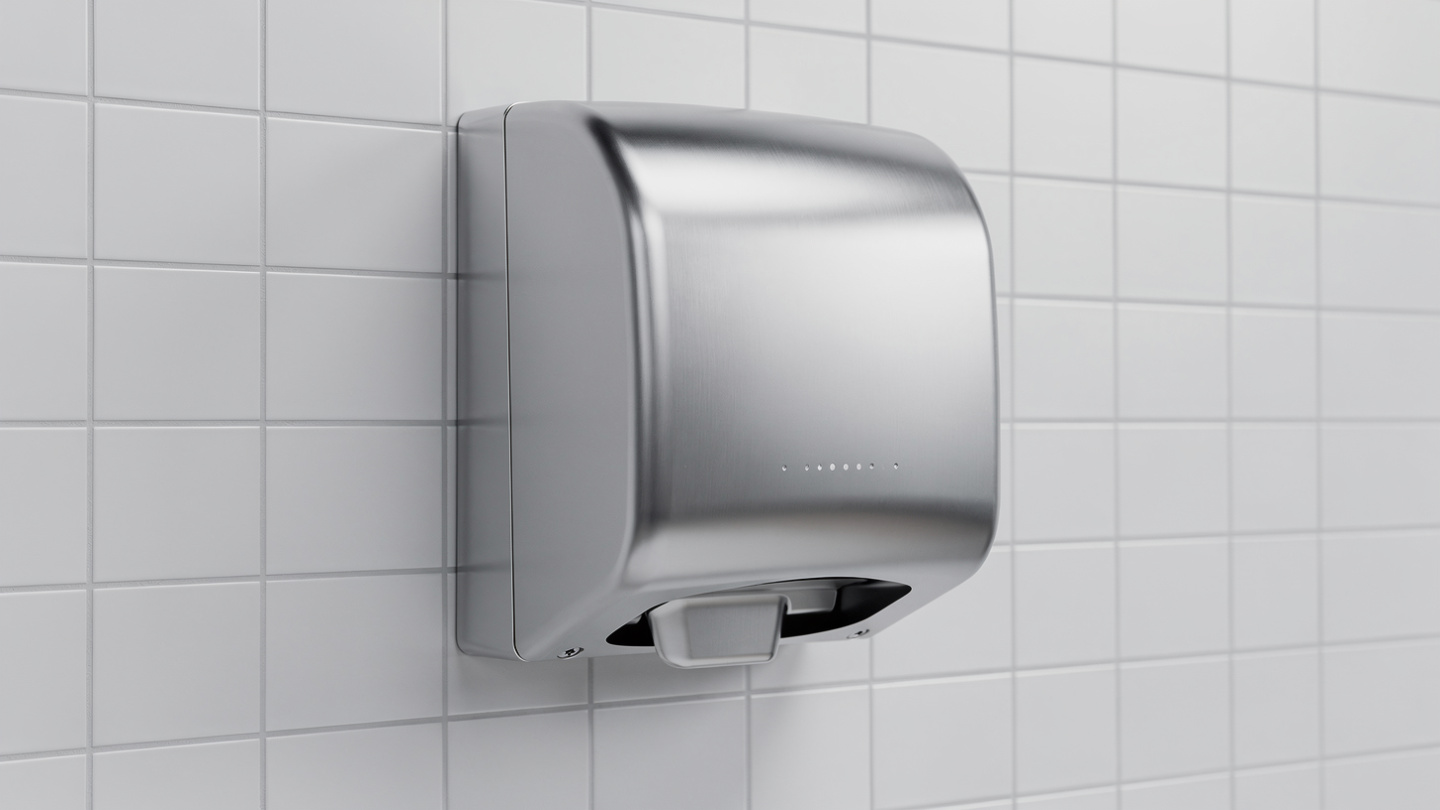
The cost of running a hand dryer is usually low per individual use, but the total annual cost can vary significantly depending on the type of dryer, drying time, power rating, traffic level and electricity tariff. For a small office bathroom, the difference between models may be modest. For a busy school, shopping centre, restaurant, gym or public facility, choosing the right dryer can have a noticeable effect on electricity use, maintenance workload and overall washroom operating costs.
A hand dryer’s purchase price is only one part of the decision. A cheaper dryer that takes longer to dry hands, uses more power, breaks down sooner or creates complaints about noise may not be the lowest-cost option over its working life. A more efficient commercial model can cost more upfront but may be more suitable for high-traffic washrooms where speed, durability and lower running costs matter.
How hand dryer running costs are calculated
The basic running cost calculation is straightforward. You need to know the dryer’s power rating, the average drying time and your electricity cost per kilowatt hour. Most hand dryers list their power rating in watts or kilowatts. A 1,000 watt dryer is a 1 kW appliance. A 2,000 watt dryer is a 2 kW appliance.
The formula is:
Energy per dry in kWh = dryer power in kW × drying time in seconds ÷ 3,600
Cost per dry = energy per dry × your electricity tariff
For example, a 1 kW dryer used for 15 seconds consumes 0.0042 kWh per use. If electricity costs 30 cents per kWh, that single dry costs around 0.13 cents. That sounds tiny, but the annual cost depends on how many times the dryer is used each day. At 200 uses per day, the same dryer would use about 304 kWh per year, costing around $91 per year at that tariff.
These examples are useful for comparison, but they should not replace your own calculation. Electricity tariffs vary by business, state, provider, time of use and contract. For an accurate estimate, use the rate shown on your electricity bill.
What affects the cost of running a hand dryer?
The main factors are power rating, drying speed, heater use, sensor efficiency and traffic level. A high-wattage dryer is not automatically expensive to run if it dries hands quickly. Likewise, a lower-wattage dryer is not always cheaper if users need to run it for much longer to achieve acceptable drying.
Older warm-air dryers often use more energy because they rely heavily on heat and may take longer to dry hands. Many modern high-speed dryers use stronger airflow and shorter drying times, which can reduce energy per dry even when the motor is powerful. Some models include a heating element that can be switched on or off, allowing the owner to balance comfort, speed and energy use.
Sensor performance also matters. A dryer that starts promptly, stops when hands are removed and avoids false activation will waste less energy. In busy commercial washrooms, even small efficiency differences can add up across thousands of uses.
Typical hand dryer energy use by dryer type
Hand dryers vary widely, so it is best to compare the specification sheet for each model. As a broad guide, conventional warm-air dryers often have higher wattage and longer drying times, while modern high-speed dryers aim to reduce drying time and energy per use. Compact dryers may suit smaller bathrooms, but they may not always be the fastest option for busy public washrooms.
-
Traditional warm-air dryer: Uses heated air and usually has a longer drying time. It may cost more to run if it has a high-wattage heater and slow drying performance.
-
High-speed hand dryer: Uses fast airflow to remove water quickly, often with shorter drying cycles. It can be more energy efficient per dry, especially in high-traffic locations.
-
Jet-style hand dryer: Usually designed for very fast drying and frequent use. It may justify a higher upfront price where speed, user throughput and reduced paper towel waste are priorities.
-
Compact hand dryer: Smaller footprint for tight bathrooms, offices or lower-traffic areas. It is good for space saving, but check drying speed and durability before using one in a busy washroom.
-
Heavy-duty vandal-resistant dryer: Robust casing, often stainless steel or similar durable construction. It may cost more upfront but can reduce replacement and repair costs in public or unsupervised facilities.
Example running cost scenarios
The following examples show how traffic level changes the annual cost. They are simplified calculations using a 1 kW dryer, a 15-second drying time and an electricity rate of 30 cents per kWh. Your actual result may be higher or lower depending on your dryer and tariff.
- 25 uses per day: approximately 38 kWh per year, costing about $11 per year.
- 100 uses per day: approximately 152 kWh per year, costing about $46 per year.
- 250 uses per day: approximately 380 kWh per year, costing about $114 per year.
- 500 uses per day: approximately 760 kWh per year, costing about $228 per year.
These figures show why low-traffic bathrooms are often more influenced by purchase price, installation cost and appearance, while high-traffic facilities should pay closer attention to energy use, drying time, durability and maintenance.
These figures show why low-traffic bathrooms are often more influenced by purchase price, installation cost and appearance, while high-traffic facilities should pay closer attention to energy use, drying time, durability and maintenance.
Hand dryers versus paper towels: where the savings come from
Hand dryers are often chosen because they remove the ongoing need to buy, store, refill and dispose of paper towels. With paper towels, the cost is not limited to the towel itself. There can also be dispenser refilling, bin liners, cleaning labour, waste removal, blocked toilets from misused towels and storage space. In busy washrooms, these costs can be substantial.
A hand dryer does use electricity, but it does not create the same consumable waste stream. For businesses with frequent washroom use, the long-term savings often come from reducing paper towel purchasing and cleaning workload rather than from electricity alone. However, the comparison depends on user behaviour, local waste costs, cleaning arrangements and the type of dryer installed.
Some venues still prefer paper towels for specific hygiene policies, customer expectations or low-noise environments. Others use a combination of dryers and paper towels. The best choice depends on the type of facility, the washroom layout and the priorities of the business.
Drying speed and energy efficiency
Drying speed is one of the most important buying factors because it affects both user satisfaction and energy use. A dryer that takes 30 to 40 seconds may frustrate users, especially in a busy restaurant, office tower, gym or school. Some users may walk away with wet hands, which can create water on floors and around basins.
A faster dryer can improve washroom flow by reducing queues and shortening each drying cycle. In many cases, a dryer with a higher motor speed but much shorter drying time can use less energy per dry than a slower, heated model. The useful comparison is not simply watts. It is energy used per completed dry.
When comparing models, look at the stated drying time, power rating and whether the heating element can be controlled. A heater may make the airflow feel more comfortable, but it can also increase energy use. In warm climates or high-traffic commercial bathrooms, heater-off operation may be acceptable if the dryer still performs well.
Choosing for bathroom type and traffic level
The right hand dryer for a small private bathroom may not be suitable for a public washroom with constant use. Start by estimating the number of users and the conditions the dryer will face.
For a small office, clinic, showroom or staff bathroom, a compact, quiet and efficient dryer may be enough. The dryer does not need to be the most powerful model available if traffic is low and users are not queuing. Appearance and noise level may matter more, especially where the washroom is close to workstations, meeting rooms or reception areas.
For restaurants, cafés, gyms, schools, entertainment venues and shopping centres, drying speed and durability become more important. These locations may need a dryer that can handle repeated use, resist damage and keep the washroom moving during peak periods. A premium model may be easier to justify when it reduces queues, paper towel waste, maintenance issues and replacement frequency.
For public facilities, transport locations and unsupervised bathrooms, vandal resistance should be a serious consideration. A robust metal casing, secure fixings and tamper-resistant design can be more important than a small saving on purchase price.
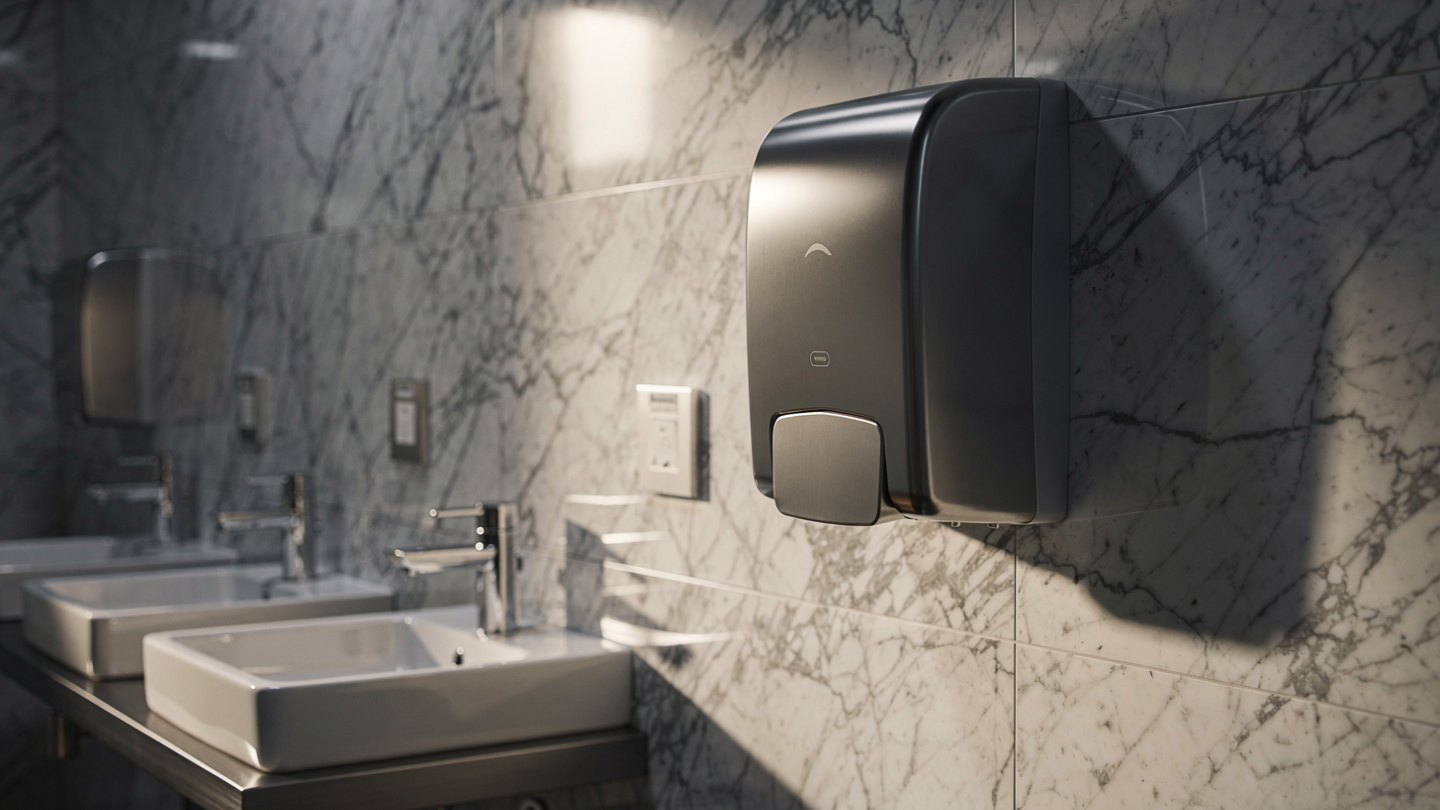
Noise level and user comfort
High-speed hand dryers can be louder than slower warm-air models because they use powerful airflow to reduce drying time. This is an important trade-off. In a large public washroom, a slightly louder dryer may be acceptable if it dries hands quickly and reduces queues. In a small office, childcare centre, healthcare setting or hospitality venue with bathrooms close to dining areas, noise may be a bigger concern.
Do not assess noise in isolation. A very quiet dryer that takes too long may cause user dissatisfaction and repeated activation. A very fast dryer that is too loud may create complaints. The best choice is a balanced model suited to the room size, wall construction and user expectations.
Hygiene considerations
Most modern commercial hand dryers are automatic, meaning users do not need to press a button. Touch-free operation can support better hygiene because fewer people touch the same surface. Some dryers also include features such as air filtration or antimicrobial surfaces, but these should be assessed carefully rather than treated as a substitute for proper cleaning.
Good hygiene depends on the complete washroom environment. Basins, taps, soap dispensers, dryer placement, cleaning frequency and ventilation all matter. A hand dryer should be installed where users can move naturally from washing to drying without dripping water across the floor. Poor placement can make even a good dryer less effective in practice.
Installation requirements and electrical considerations
Most commercial hand dryers require fixed electrical installation by a qualified electrician. Before purchasing, check the available wall space, electrical supply, mounting height, wall strength and proximity to basins. Some dryers are heavier than others and may require suitable wall reinforcement or secure fixings.
The installation location should allow comfortable use by the intended users and comply with relevant building, electrical and accessibility requirements. In commercial washrooms, consider whether children, wheelchair users or people with limited mobility may need access. A dryer that is mounted too high, too close to a corner or too far from the basin may be inconvenient even if the dryer itself is efficient.
Installation cost should be included in the total project budget. Replacing an existing hand dryer may be relatively simple if the electrical point and wall position are suitable. A new installation, relocation or multiple-dryer fit-out may require more planning.
Durability, vandal resistance and build quality
Durability has a direct effect on long-term cost. In a low-traffic private office bathroom, a standard commercial dryer may last well if installed correctly and cleaned regularly. In a school, nightclub, stadium, public park facility or transport washroom, the dryer may be exposed to rough use, impact, moisture, attempted tampering or vandalism.
For demanding environments, look for strong casing materials, secure mounting, reliable sensors and a design that is easy to clean. Stainless steel or robust metal finishes are often preferred in public or high-use locations because they resist damage better than lightweight plastic housings. The upfront cost may be higher, but fewer repairs and replacements can make the total cost more favourable over time.
Maintenance and cleaning costs
Hand dryers generally require less daily restocking than paper towel systems, but they are not maintenance-free. The exterior should be cleaned regularly, air inlets should be kept clear and any filters should be checked or replaced according to the manufacturer’s instructions. In dusty, humid or high-traffic environments, maintenance may need to be more frequent.
Cleaning staff should be able to access the dryer safely and wipe surrounding walls and floors. Some high-speed dryers can blow water droplets onto nearby surfaces if poorly positioned, so placement and cleaning routines should be considered together. A model that is easy to wipe down and has simple service access can reduce maintenance effort over its life.
Style, finish and washroom design
Although running cost is important, appearance should not be ignored. A hand dryer is a visible fixture in the washroom and should suit the surrounding design. White finishes often suit simple office and public bathrooms. Stainless steel, brushed metal or darker finishes may be preferred in restaurants, hotels, premium offices and modern commercial interiors.
For small bathrooms, choose a dryer that does not project too far from the wall or obstruct movement. For premium hospitality venues, a quieter and more refined design may be worth paying for. For industrial or public environments, durability and ease of cleaning may matter more than decorative appearance.
Commercial versus residential use
Commercial hand dryers are designed for repeated use, fixed installation and public or workplace environments. They are usually a better choice for offices, restaurants, schools, gyms, workshops, warehouses, hospitality venues and public facilities. Residential bathrooms generally have much lower use, so the payback compared with towels may be less important.
That said, some homes, home workshops, studios or private facilities may still benefit from a compact hand dryer where convenience, reduced towel laundering or a cleaner guest bathroom is desired. For residential use, noise, size and appearance may matter more than heavy-duty performance.
How to compare hand dryers before buying
When comparing hand dryers, avoid focusing only on the purchase price. A practical comparison should include energy per dry, drying speed, noise, installation needs, durability, maintenance requirements and suitability for the washroom environment.
- Check the power rating and drying time, then estimate the cost per dry using your electricity tariff.
- Match the dryer to the expected traffic level rather than choosing the cheapest model available.
- Consider whether a faster dryer is worth a higher upfront cost in busy washrooms.
- Choose a quieter model where bathrooms are close to offices, dining areas, classrooms or accommodation.
- Look for robust construction in schools, public facilities and unsupervised washrooms.
- Confirm installation requirements before ordering, especially for new fit-outs or multi-dryer projects.
- Consider cleaning access, filter maintenance and the surrounding wall and floor area.
When is a premium hand dryer worth the extra cost?
A premium hand dryer is most likely to make sense in a high-traffic commercial washroom where performance, speed and reliability affect the user experience every day. In these locations, the additional purchase cost may be offset by lower consumable costs, reduced waste, fewer maintenance issues and better durability.
In a low-use staff bathroom, a premium model may still be desirable for appearance, quietness or build quality, but the financial payback may be slower. In this case, the best choice may be a reliable mid-range dryer that balances price, efficiency and user comfort.

Practical conclusion: choosing the right hand dryer for running cost and value
The cost to run a hand dryer is usually very low per use, but the best buying decision depends on more than electricity consumption. A good hand dryer should dry hands quickly, suit the traffic level, fit the washroom layout, operate at an acceptable noise level and withstand the demands of the environment.
For small offices and lower-traffic bathrooms, look for a compact, quiet and efficient model with a sensible purchase price. For restaurants, gyms, schools and busy commercial washrooms, prioritise drying speed, durability and energy efficiency per dry. For public or unsupervised facilities, choose a robust, vandal-resistant dryer that can handle heavy use and reduce repair risk.
The most cost-effective hand dryer is not always the cheapest unit and not always the most powerful one. It is the model that provides reliable drying performance, appropriate build quality and manageable running costs for the specific washroom where it will be installed.